
Application Advantages of ZNS SSDs in AI Training Scenarios
As AI training scales from single‑node experiments to massive distributed clusters, storage architecture has become a critical bottleneck. Traditional SSDs, while fast, are not always optimized for the write‑heavy, sequential, and log‑structured patterns that modern AI workloads generate. Zoned Namespace (ZNS) SSDs are designed to better match these patterns by reshaping how data is written and managed on flash. In AI training scenarios, the result can be higher throughput, lower write amplification, longer drive lifetimes, and more predictable performance.

This blog post examines why ZNS SSDs are well suited to AI training, how they differ from conventional block‑addressed SSDs, and which specific aspects of AI workloads benefit most. It also discusses the architectural implications for data pipelines and training platforms that adopt zoned storage.
What ZNS SSDs are and how they differ
ZNS SSDs introduce the concept of zones within an NVMe namespace. Each zone is a large, contiguous range of logical block addresses that must be written sequentially. Once a zone is “open,” the host writes data in order until the zone is full or reset. Random in‑zone overwrites are not allowed; instead, new writes go to fresh zones.
This model differs from conventional SSDs, where the host can write to any logical block at any time. In traditional designs, the drive’s Flash Translation Layer (FTL) must perform complex mapping and garbage collection to reconcile random logical writes with the underlying sequential nature of NAND. ZNS shifts some of this responsibility to the host, aligning logical write behavior more directly with physical flash characteristics.
By enforcing sequential writes per zone, ZNS SSDs reduce internal fragmentation and make garbage collection simpler and more efficient, which is particularly beneficial for workloads that naturally produce append‑only or log‑structured data.
AI training workload characteristics

AI training involves repeatedly processing large datasets through compute pipelines, updating model parameters, and storing checkpoints and logs. Typical operations include streaming training samples from disk, writing intermediate results, and periodically saving large model snapshots. Many of these operations are sequential by nature or can be organized into sequential patterns.
Training datasets often consist of large files—images, audio, text records—stored in formats like TFRecord, Parquet, or custom sharded containers. Checkpoints are written as bulk, mostly append‑only outputs. Logging frameworks record events and metrics continuously. While some metadata or small random reads exist, the core data movement is dominated by block‑level sequential IO.
These characteristics align well with ZNS design principles: if training data and artifacts are mapped to zones intelligently, the storage system can exploit sequential writes to minimize internal overhead and maximize bandwidth.
Reduced write amplification and improved endurance
Write amplification occurs when the SSD must perform extra internal writes beyond what the host requested, usually due to garbage collection and data movement. In AI training, where large volumes of data are written and rewritten over time, high write amplification can accelerate NAND wear and reduce drive lifespan.
ZNS SSDs help mitigate this by allowing the host or file system to write data in large, sequential chunks that align with physical erase blocks. Since zones are written in order and later reset or reclaimed as whole units, the drive can recycle blocks with minimal relocation of live data. This lowers write amplification compared with random write patterns on standard SSDs.
Improved endurance is particularly valuable in AI clusters where SSDs handle continuous heavy IO. Longer drive lifetimes reduce replacement costs, downtime, and maintenance overhead, contributing to lower total cost of ownership (TCO) for training infrastructure.
Higher effective throughput and predictable performance
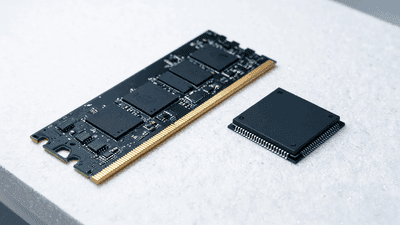
Sequential writes and reads are inherently more efficient on flash, and ZNS SSDs are designed to exploit this. By reducing internal housekeeping and aligning host IO with physical structures, ZNS drives can deliver higher effective throughput, especially for sustained workloads.
In AI training, where data pipelines often run at high utilization, performance predictability matters as much as peak bandwidth. When internal garbage collection or wear leveling on conventional SSDs kicks in, IO latency can spike and throughput may vary, disrupting training step times and synchronization across nodes.
ZNS’s more deterministic write behavior helps smooth these performance variations. With well‑designed zone allocation and reclamation, training jobs experience steadier IO characteristics, making it easier to plan throughput budgets and avoid tail latency issues in distributed training.
Better alignment with log‑structured and streaming data pipelines
Many AI frameworks and data platforms already use log‑structured designs: data is appended to logs or segments, and compaction and cleaning manage older entries. Examples include streaming ingestion systems, shard‑based dataset formats, and checkpoint logs. ZNS SSDs map naturally to these patterns.
Zones can represent logical logs or segments; new data is appended until zones are full, then new zones are opened. When data within zones is no longer needed—such as outdated checkpoints or stale intermediate results—zones can be reset and reused, mirroring log retention policies.
This alignment reduces impedance between application data models and storage behavior. Instead of forcing log‑structured software to operate on randomly addressable blocks with hidden internal translation, ZNS provides a storage structure that reflects the same sequential semantics.
Optimizing training dataset layout on zones

To realize ZNS advantages, dataset layout must be thoughtfully designed. One strategy is to assign zones to logical dataset partitions or shards. For example, each zone could hold one shard of training data, written sequentially as new samples or preprocessed batches are generated.
Zones might also correspond to specific epochs or versioned datasets. An AI team could write the dataset used for a given experiment into dedicated zones, then reset them when the dataset is retired or replaced. This model simplifies dataset management and ensures that data writes remain sequential even as experiments evolve.
Careful zone allocation can minimize cross‑zone fragmentation and ease reclamation. Training frameworks and storage layers that understand zone semantics can place data to maximize locality and minimize random IO, reinforcing ZNS performance benefits.
Checkpointing and model state management
Checkpointing—periodically saving model parameters to disk—is a critical part of AI training. Checkpoints are generally large binary blobs written sequentially, making them ideal candidates for zone‑based storage. With ZNS, each checkpoint series can occupy its own set of zones.
As training progresses, newer checkpoints supersede older ones. Once older checkpoints are no longer needed, their zones can be reset in bulk, avoiding fine‑grained deletion and compaction. This reduces metadata complexity and write amplification associated with managing many small files or blocks.
For long‑running training jobs, efficient checkpoint management on ZNS SSDs can significantly reduce IO overhead and help maintain throughput even as tens or hundreds of checkpoints are created and retired.
Temporary data, caches, and scratch space
AI training often uses temporary data: preprocessed batches, augmentation outputs, intermediate representations, and caches for speeding up data access. These structures are frequently written and discarded, and they can generate substantial IO traffic.
ZNS SSDs are well suited for such scratch workloads. Zones can be dedicated to transient data, written sequentially as scratch space usage grows. When temporary data is no longer needed, entire zones can be reset, immediately reclaiming space without complex garbage collection.
This approach reduces overhead for ephemeral storage, supporting high‑throughput training loops that depend on efficient caching and temporary file operations, particularly in multi‑GPU or multi‑node setups.
Implications for file systems and training frameworks
To fully leverage ZNS, file systems and training frameworks must be zone‑aware. Conventional file systems assume random access across blocks and rely on SSDs to hide internal constraints. ZNS‑friendly file systems, object stores, or data layers need to manage zone lifecycles directly: opening zones, tracking write pointers, grouping logically related data, and orchestrating resets.
AI frameworks may integrate with these storage layers by exposing hints about data usage. For instance, a training pipeline could tag certain data streams as append‑only logs, enabling the storage layer to place them in dedicated zones. Likewise, frameworks could coordinate checkpoint deletion with zone resets to minimize fragmentation.
While this requires development effort, the result is a stack that co‑designs data layout with SSD behavior, yielding performance and endurance benefits that generic block‑based approaches struggle to match.
Resource isolation and multi‑tenant training clusters
In multi‑tenant training clusters, different teams or jobs share storage devices. ZNS zones can provide a natural mechanism for resource isolation. Each tenant or job can be assigned a subset of zones, reducing interference between workloads and making storage accounting more straightforward.
Zones can be monitored for utilization, throughput, and lifetime, giving operators fine‑grained visibility into how each tenant uses storage. If one job writes heavily, its zones absorb the wear without directly impacting others, assuming careful allocation.
For cloud providers or large enterprises running diverse AI workloads, this zone‑based isolation can simplify capacity planning, cost attribution, and quality‑of‑service policies at the storage layer.
Energy efficiency and thermal behavior
Efficient IO patterns not only improve performance but can also reduce energy consumption and thermal stress. ZNS SSDs, by minimizing internal data movement and garbage collection, may operate more efficiently for sequential workloads than conventional SSDs under comparable load.
In dense training clusters where power and cooling are major constraints, incremental energy savings from storage optimization contribute to overall system efficiency. Lower internal activity on SSDs can reduce heat generation, easing demands on cooling infrastructure and potentially improving reliability.
While energy gains may be modest per drive, they scale across racks and data centers, aligning ZNS adoption with broader sustainability and efficiency goals in AI infrastructure.
Challenges and adoption hurdles
Despite their advantages, ZNS SSDs introduce complexity. Host software must be modified to manage zones, and teams need to rethink data layouts. Existing tools and frameworks built around conventional block devices may require substantial adaptation to exploit zoned storage effectively.
Operational practices also change: administrators must monitor zone states, plan reset operations, and ensure that applications do not violate sequential write constraints. Misuse of zones—such as writing small, random updates across many zones—can negate benefits and even harm performance.
These hurdles mean that ZNS adoption tends to start in environments where the performance and endurance gains justify the engineering investment—such as large AI training platforms with predictable workloads and in‑house storage expertise.
Strategic considerations for AI infrastructure teams
For teams building AI training infrastructure, the decision to adopt ZNS SSDs involves weighing short‑term integration costs against long‑term performance and TCO benefits. Key factors include workload patterns, existing storage stack design, and organizational capacity to develop or adopt zone‑aware software.
Proof‑of‑concept deployments can help quantify gains: comparing throughput, latency stability, write amplification, and drive wear between ZNS and conventional SSD setups on representative training jobs. These experiments inform whether ZNS should be used broadly or targeted at specific workloads like checkpointing or scratch space.
Over time, as tooling and best practices mature, ZNS is likely to become a more standard option in AI‑focused storage offerings, especially for organizations seeking to push the limits of training efficiency at scale.
Conclusion: aligning storage semantics with AI training reality
ZNS SSDs bring storage semantics closer to the realities of flash hardware and AI training workloads. By structuring writes around zones and sequential patterns, they reduce write amplification, improve endurance, and deliver more predictable performance for data‑intensive training pipelines.
While adoption requires changes in file systems, data pipelines, and operational practices, the application advantages of ZNS in AI training—especially at scale—make them a compelling tool for teams striving to optimize every layer of their stack. As AI models and datasets continue to grow, storage architectures that co‑design with workload patterns, like ZNS, will play a key role in sustaining performance and cost efficiency in next‑generation training environments.