
Server DRAM vs. Mobile DRAM Price Divergence: Arbitrage Opportunity Analysis
The DRAM market is never perfectly synchronized. Even though server DRAM and mobile DRAM share common manufacturing roots, their price trajectories often diverge because each segment is driven by different demand cycles, product mixes, and strategic priorities. When that divergence becomes pronounced, it naturally raises the question: is there an arbitrage opportunity? Can manufacturers, module houses, or even investors exploit pricing gaps between server and mobile DRAM in a systematic way?
This blog post explores the nature of price divergence between server DRAM and mobile DRAM and assesses where genuine arbitrage opportunities may exist. We examine the structural drivers of pricing in each segment, the technical and commercial constraints that limit interchangeability, and the practical strategies that market participants can use to benefit from misalignments—without assuming that every gap is easy money.
Understanding the two segments: server vs. mobile DRAM
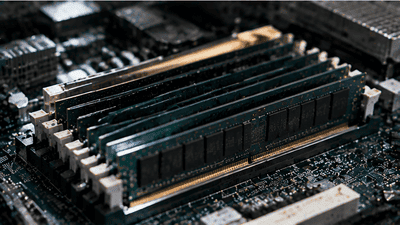
Server DRAM and mobile DRAM occupy distinct positions in the DRAM ecosystem. Server DRAM—primarily registered DIMMs (RDIMMs) and load‑reduced DIMMs (LRDIMMs)—is designed for data centers and enterprise servers where capacity, reliability, and multi‑socket scalability are paramount. Mobile DRAM, typically LPDDR variants, is optimized for smartphones, tablets, and increasingly compact devices, focusing on low power consumption and compact form factors.
Server DRAM tends to be deployed in large capacities per system, often with error‑correcting features, while mobile DRAM is integrated directly onto device boards or packages, tightly coupled with SoCs. These distinct technical and deployment environments shape their demand profiles and pricing behavior: server DRAM is tied to data‑center capex cycles and enterprise refresh plans, whereas mobile DRAM is linked to consumer device launches, seasonality, and regional handset trends.
Why prices diverge: different demand engines

Price divergence arises because the demand engines for server and mobile DRAM rarely move in lockstep. In server markets, large‑scale cloud investments, AI infrastructure build‑outs, and enterprise virtualization projects can produce sudden spikes in DRAM requirements. When hyperscalers launch major expansion phases or when new server platforms with higher memory per socket roll out, server DRAM prices can climb rapidly.
Mobile DRAM, by contrast, is driven by smartphone and tablet cycles. New flagship launches and technology transitions (e.g., LPDDR5 adoption) affect demand, but the overall pattern is more seasonal and closely tied to consumer spending behavior. If handset demand softens due to macroeconomic pressures or saturation, mobile DRAM prices can remain relatively subdued even when server DRAM is experiencing tightness.
Because these cycles are partially independent, it is common to see periods when server DRAM is expensive relative to mobile DRAM, and vice versa. The divergence can be reinforced by product mix shifts: for example, a surge in high‑capacity RDIMMs for AI servers may push server DRAM ASPs higher just as mobile DRAM demand normalizes after a wave of handset launches.
Supply‑side factors: wafer allocation and node economics
On the supply side, DRAM makers must decide how to allocate wafer output between server and mobile products. Advanced nodes are often first deployed for high‑margin segments such as server DRAM or premium mobile DRAM, while older nodes serve cost‑sensitive markets. These allocation decisions can amplify price divergence.
When demand spikes for server DRAM, vendors may prioritize wafers for server‑grade products, constraining mobile DRAM supply and potentially raising prices there too—though often with a lag. Conversely, if mobile demand is strong but server demand softens, manufacturers may shift capacity toward LPDDR, dampening server DRAM prices while supporting mobile DRAM ASPs.
Process differences also matter. Server DRAM may require more stringent testing, binning, and packaging steps, increasing cost and justifying higher prices. Mobile DRAM’s low‑power and packaging requirements introduce their own complexities. These production realities mean that price divergence is not simply a matter of mispricing; it reflects differences in cost structure and risk profiles across segments.
Technical constraints on arbitrage
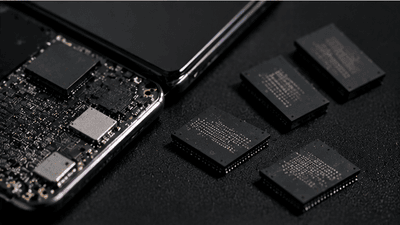
A straightforward arbitrage—buy cheap mobile DRAM and sell it into server markets, or vice versa—is generally not feasible due to technical constraints. Server DRAM and mobile DRAM are not interchangeable commodities; they differ in interface standards, form factors, signal integrity requirements, and reliability features.
Server DRAM is usually built in DIMM form with DDR interfaces, registered or buffered for multi‑channel, multi‑socket environments. Mobile DRAM is typically LPDDR, soldered down or integrated into packages with different power and signaling characteristics. Adapting one type to operate as the other would require substantial redesign, new controllers, and requalification, which defeats the purpose of quick arbitrage.
Furthermore, system vendors design boards and platforms around specific memory standards. Even if a clever engineering solution could adapt LPDDR to server‑like duties in some niche cases, mainstream servers are not built for such substitutions. This means that arbitrage must be more subtle: reallocating production or shifting sales focus, rather than literally swapping memory types across segments.
Commercial constraints: contracts, qualifications, and brand
In addition to technical issues, commercial factors limit arbitrage. Large buyers—cloud providers, smartphone OEMs, PC manufacturers—sign contracts that specify memory types, volumes, prices, and delivery schedules. Breaking or dramatically altering these agreements to chase short‑term price differences can damage relationships and brand trust.
Qualification processes for server DRAM are especially stringent. Vendors must pass reliability tests, error‑handling checks, and compatibility validations for specific platforms. Mobile DRAM likewise undergoes qualification for handset designs and SoCs. Arbitrage that involves rerouting capacity to different segments risks disturbing these commitments and could require new qualifications, which take time and resources.
In practice, arbitrage opportunities are therefore constrained by long‑term partnerships and brand considerations. Vendors can adjust future allocations and negotiate pricing terms, but they cannot simply flip a switch to chase every short‑term divergence without considering these commercial realities.
Where arbitrage actually happens: internal allocation and product mix

Given these constraints, the most meaningful arbitrage occurs inside DRAM makers’ and module vendors’ own planning processes. When price divergence emerges, they can shift wafer allocation, product mix, and market focus to exploit relative profitability differences between server and mobile segments.
For example, if server DRAM prices are rising while mobile DRAM prices remain weak, a manufacturer might allocate more wafers to server DRAM products, emphasizing high‑capacity RDIMMs for data centers. This internal arbitrage translates into higher average margins, since the same silicon area yields more revenue in the server segment during that period.
Conversely, if mobile DRAM demand accelerates and mobile ASPs become relatively more attractive, capacity can be tilted toward LPDDR production, while server DRAM output is trimmed to avoid oversupply. In both cases, the arbitrage is about choosing the most profitable segment for marginal capacity, rather than cross‑selling physical modules between segments.
Module makers and inventory arbitrage
Module makers and distributors can engage in a different kind of arbitrage: inventory and timing. While they cannot convert mobile DRAM into server DIMMs, they can adjust their stocking and sales strategies based on observed and anticipated price divergence.
If they forecast that server DRAM prices will rise due to upcoming platform launches or data‑center expansion cycles, they may increase holdings of server modules ahead of time, securing inventory at lower prices. When the cycle peaks, they can capture higher margins. The same logic applies to mobile DRAM when handset cycles are expected to tighten the market.
This form of arbitrage carries risk: misjudging cycles can lead to inventory losses if prices move in the opposite direction or if demand fails to materialize. It also requires careful capital management, as holding large inventories ties up cash. Nevertheless, experienced module houses often engage in this type of timing arbitrage, using price divergence between segments as a guide for where and when to concentrate inventory.
Investor perspective: relative value between server and mobile DRAM plays
From an investor standpoint, price divergence between server and mobile DRAM segments can create relative value opportunities. Companies with heavy exposure to server DRAM may benefit disproportionately when server prices rise, while those focused on mobile DRAM could lag—or vice versa when mobile cycles strengthen.
Investors can analyze revenue and margin breakdowns to identify which firms stand to gain or lose from current divergence. If server DRAM ASPs are outpacing mobile DRAM, companies with strong server memory portfolios may look undervalued relative to their earnings potential. Similarly, when mobile DRAM pricing is unusually strong, firms with dominant handset‑memory positions might offer better upside.
This is a form of financial arbitrage: reallocating capital among memory‑related stocks based on segment‑specific price dynamics. It does not change physical capacity but leverages divergence to capture relative performance differences in equity markets.
Risk analysis: why divergence is not a guaranteed arbitrage
Despite the allure of arbitrage, price divergence does not guarantee easy profits. Several risks must be considered. First, cycles can turn quickly. Server DRAM prices may fall if cloud investments pause or if capacity expansions overshoot. Mobile DRAM demand can also falter due to macroeconomic shocks or shifts in device design.
Second, data and forecasts are imperfect. Identifying real divergence versus transient noise requires careful analysis of order books, production plans, and macro trends. Overreacting to short‑term price moves can lead to misallocation of capacity or capital.
Third, structural differences between segments limit how far arbitrage can go. Some divergence is persistent because server and mobile DRAM inherently serve different markets with different risk profiles and value propositions. Trying to “correct” such structural divergence may misinterpret the underlying economics.
Finally, execution risk is significant. For manufacturers, shifting capacity involves engineering and qualification efforts. For module makers, adjusting inventory carries financial risk. For investors, repositioning portfolios can be complicated by liquidity constraints and broader market volatility. Arbitrage opportunities are meaningful only when these execution risks are manageable and clearly outweighed by potential gains.
Strategic playbook: how different players can respond
Different market participants can adopt tailored strategies to respond to server vs. mobile DRAM price divergence.
Memory manufacturers can implement dynamic capacity planning: regularly reassessing segment profitability, adjusting wafer allocation, and refining product mixes to steer output toward segments with better pricing per bit. They can also develop flexible product platforms that make it easier to ramp up or down specific DRAM types as market conditions change.
Module makers and distributors can strengthen their market intelligence, monitoring price moves, platform launches, and customer demand to fine‑tune inventory and pricing strategies. They might establish hedging mechanisms or long‑term contracts to manage risk while still exploiting favorable divergences.
Buyers—data centers, OEMs, handset makers—can use divergence as a lever in negotiations, timing purchases when their segment faces favorable pricing and being cautious when signs of tightness emerge. In some cases, they can adjust memory configurations or upgrade cycles to benefit from relative price movements across segments.
Investors can incorporate segment analysis into valuations, differentiating between companies with server‑heavy and mobile‑heavy exposure and adjusting holdings as divergence shifts relative profitability prospects.
Long‑term outlook: convergence, divergence, and structural balance
Over the long term, some degree of price divergence between server and mobile DRAM is likely to persist, reflecting the fundamentally different nature of their markets. The question is not whether prices will ever be perfectly aligned but whether short‑term divergences create windows of opportunity for smart allocation and timing.
Technological trends such as increasing memory per server, rising on‑device AI, and new packaging solutions (including mixed LPDDR and DDR environments in some platforms) may introduce new connections between segments. These developments could tighten the link between server and mobile DRAM pricing or, alternatively, create new axes of divergence as product requirements evolve.
For now, the key takeaway is that price divergence is a signal, not a guarantee. It invites careful analysis of segment‑specific dynamics and encourages strategic responses from manufacturers, module makers, buyers, and investors. When approached with discipline and realistic expectations, it can reveal genuine arbitrage opportunities—mostly in the form of smarter capacity, inventory, and capital allocation—without assuming that server and mobile DRAM are interchangeable commodities.
Conclusion: arbitrage as informed reallocation, not simple swapping
Server DRAM and mobile DRAM price divergence reflects the complex interplay of independent demand cycles, supply allocation decisions, and technology differences. While the idea of arbitrage between these segments is appealing, real opportunities rarely involve simple swapping of products across markets. Instead, they usually take the form of informed reallocation: manufacturers redirecting capacity, module makers timing inventory, buyers optimizing procurement, and investors shifting capital among exposure profiles.
By understanding the structural reasons behind price divergence and respecting the technical and commercial constraints of each segment, market participants can move beyond simplistic arbitrage notions and develop strategies that genuinely capture value. In the evolving landscape of DRAM, this kind of disciplined arbitrage—grounded in segment realities—is likely to remain an important tool for navigating volatility and maximizing returns.