
The Disruption of Global Memory Pricing by YMTC and CXMT Expansion
Global memory pricing has long been shaped by a relatively small group of dominant DRAM and NAND producers, whose investment cycles, technology transitions, and supply discipline set the tone for the entire industry. In recent years, however, China-based memory makers—most notably YMTC in NAND and CXMT in DRAM—have begun to expand capacity and capabilities in ways that challenge this traditional equilibrium. Their rise introduces new sources of bit supply, new technology roadmaps, and new strategic behaviors, all of which contribute to the disruption of global memory pricing.

This blog post examines how the expansion of YMTC and CXMT is altering the pricing dynamics of NAND and DRAM. It explores their positioning, technology trajectories, and cost structures, and analyzes how additional Chinese memory capacity interacts with existing suppliers, demand patterns, and geopolitical constraints to reshape the global memory landscape.
From a concentrated supplier base to a more diversified field
For much of the modern era, memory markets have been dominated by a handful of large firms. A relatively small number of companies controlled the majority of DRAM and NAND output, enabling them to influence pricing through coordinated capacity decisions, utilization cuts, and timing of node transitions. This concentration made supply discipline possible, even if cycles still swung between oversupply and shortages.
The emergence of YMTC as a meaningful NAND supplier and CXMT as an expanding DRAM producer changes that structure. Their growth adds new players with their own investment plans and strategic priorities. As their bit output rises, the global supplier base becomes more diversified, complicating attempts by incumbents to manage supply and stabilize prices through coordinated actions.
A more diversified field introduces more variables into pricing models: each new supplier’s ramp pace, technology mix, and regional focus can shift the balance between supply and demand, making price forecasts more complex and less reliant on a small set of familiar actors.
YMTC’s role in NAND pricing disruption

YMTC’s expansion in NAND introduces both additional bit supply and a potentially different cost and technology profile. As a relatively new entrant compared with long-established NAND leaders, YMTC has focused on innovative architectures and competitive density, aiming to offer high-capacity 3D NAND at attractive cost structures.
As YMTC’s bit output grows, global NAND capacity increases beyond what traditional producers would have provided alone. If this additional supply arrives during periods of moderate demand, it can contribute to oversupply, putting downward pressure on ASPs across segments. Even if the absolute share of YMTC remains smaller than incumbents, incremental bits from a new entrant can be enough to tip delicate balances.
Moreover, YMTC’s expansion introduces competitive tension: incumbents may respond with pricing actions or more aggressive technology transitions, further influencing global price trajectories. The net effect is a more dynamic, and potentially more volatile, pricing environment for NAND.
CXMT’s impact on DRAM pricing dynamics
CXMT’s growth in DRAM plays a similar disruptive role. DRAM supply has historically been managed by a small group of producers with deep experience and mature fabs. As CXMT scales its capacity and refines its technology roadmap, it adds new DRAM bits to the global market, particularly in certain nodes and segments where it chooses to compete.
Additional DRAM supply from CXMT can exert downward pressure on prices, especially in commodity or mainstream segments where capacity is most sensitive to incremental bits. Existing producers that previously could align output with demand now face competition from a player whose investment cycle may be driven by different factors, including domestic strategic priorities and long-term technology ambitions.
This new supply source affects how quickly DRAM prices recover after downturns and how high they can rise during upturns. Even if CXMT’s initial volumes are modest relative to global totals, the trajectory of its ramp affects expectations and behavior across the supplier and buyer community.
Cost structures and competitive positioning
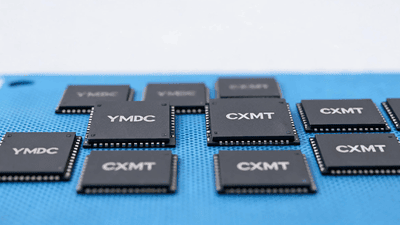
Cost structures matter deeply in pricing disruption. If YMTC and CXMT can achieve competitive cost per bit—through efficient fabs, favorable input costs, and modern nodes—they gain the flexibility to price aggressively in certain markets. This can undercut incumbents in segments where buyers are highly cost-sensitive, such as commodity SSDs or standard DRAM modules.
Aggressive pricing by new entrants can force incumbents to choose between defending share by lowering prices or ceding certain markets while focusing on higher-value segments. Both strategies influence global ASP trends. Lower prices in the most volume-heavy tiers can drag overall averages down, even if premium segments maintain stronger pricing.
The combination of cost-competitive expansion and strategically targeted pricing means YMTC and CXMT have the potential to reset price expectations in specific parts of the memory market, with ripple effects across the rest of the ecosystem.
Domestic demand and export ambitions
YMTC and CXMT operate within a large domestic market that provides significant demand for NAND and DRAM across smartphones, PCs, servers, and industrial applications. Serving this domestic demand allows them to ramp production and refine manufacturing processes without immediately relying on global exports for scale.
As they gain experience and volume at home, these companies can increasingly explore overseas opportunities, either directly or via partners and OEM arrangements. Export ambitions introduce their products into new regions, further expanding their potential impact on pricing outside China.
This dual focus—domestic base with global aspirations—creates a layered influence on pricing: domestic supply-demand dynamics shape their initial portfolios and cost structures, while expansion beyond borders brings their pricing strategies into direct contact with incumbent suppliers worldwide.
Technology trajectories and node competition

Technology trajectories of YMTC and CXMT determine where and how they disrupt pricing. If they can bring competitive 3D NAND layer counts or DRAM nodes to market at scale, they compete head-on with incumbent products. If their technology focuses on slightly older nodes or specific form factors, they may compete more in value segments or targeted applications.
As their roadmaps mature, incumbents must account for these trajectories when planning their own transitions. For example, if YMTC’s 3D NAND reaches layer counts and performance suitable for mainstream SSDs, traditional NAND leaders may face pressure to accelerate or refine their own transitions to stay ahead or maintain differentiation.
The interplay of technology roadmaps affects pricing because each node transition carries its own cost curves and supply potential. Additional competitors on similar nodes can amplify bit growth and intensify price competition, especially during ramp phases.
Geopolitical constraints and segmentation of markets
The expansion of YMTC and CXMT is occurring within a complex geopolitical environment. Trade restrictions, export controls, and technology access limitations can influence where their products can be sold and what technologies they can adopt. These constraints can create segmented markets: some regions may have limited access to certain Chinese memory products, while others may see more extensive penetration.
Segmentation can lead to uneven pricing patterns. In markets where YMTC and CXMT compete freely, prices may be more aggressively challenged; in markets where access is restricted, incumbent suppliers may retain more pricing power. Over time, indirect routes—such as OEM or module-level integration—may blur these boundaries, but geopolitical factors remain a key backdrop.
Thus, disruption of global memory pricing is not uniform; it varies by region and application, reflecting policy decisions as much as pure supply-demand economics.
Effects on supply discipline and cycle amplitude
Supply discipline—the ability of producers to adjust output and investment to avoid extreme oversupply—is weakened when more actors participate in the market with diverse objectives. YMTC and CXMT’s expansion adds new fabs and capacity that may not be fully synchronized with incumbents’ planning, increasing the risk of aggregate oversupply in certain phases.
This can enlarge the amplitude of memory cycles. During upswings, more producers may ramp aggressively, causing bit growth to overshoot demand. During downturns, it may take longer for the entire supplier base to cut back sufficiently to restore balance. Such dynamics translate into more pronounced price swings and potentially longer inventory digestion periods.
Investors and customers need to recognize that the addition of new suppliers can make cycles more complex and less controlled, even if each individual company pursues rational strategies within its own context.
Segment-specific pricing impacts
The disruptive impact of YMTC and CXMT on pricing is not identical across segments. In commodity segments—such as mainstream client SSDs or standard PC DRAM modules—where specification requirements are relatively uniform and buyers are highly price-sensitive, new entrants can exert stronger downward pressure by competing on cost.
In specialized segments—such as high-performance enterprise SSDs or advanced server DRAM with stringent reliability and ecosystem requirements—pricing may be less immediately affected, as incumbents hold advantages in validation, support, and integration. However, over time, as Chinese suppliers improve capabilities and certifications, even these segments may feel pricing influence.
The overall result is a layered disruption: the most commoditized tiers see earlier and stronger price competition, while higher-end tiers experience more gradual shifts as technology and trust build.
Buyer behavior and procurement strategies
Buyers—OEMs, cloud providers, and system integrators—respond to the presence of new memory suppliers by adjusting procurement strategies. The availability of YMTC and CXMT products offers opportunities to diversify sources, negotiate better terms, and hedge against supply or price risk from incumbents.
Some buyers may initially adopt Chinese memory products in secondary or less critical lines, testing quality and reliability. If performance and support prove satisfactory, they can expand usage to more central products. This gradual adoption pattern spreads pricing disruption over time, with early impacts in value-oriented segments and later expansion into mainstream usage.
As more buyers incorporate YMTC and CXMT into supply chains, incumbents must respond by sharpening their value propositions—whether through performance, reliability, ecosystem support, or tailored solutions—rather than relying only on established presence.
Long-term implications for incumbents
For established memory producers, the expansion of YMTC and CXMT represents both a challenge and a catalyst for strategic rethinking. On one hand, increased competition can compress margins in commodity segments and reduce the effectiveness of supply discipline in managing cycles. On the other hand, it encourages incumbents to focus on differentiation, high-value solutions, and operational excellence.
Some incumbents may choose to emphasize advanced technologies—such as leading-edge nodes, specialized enterprise products, or integration with AI accelerators—where barriers to entry are higher. Others may pursue deeper partnerships with key customers or invest in complementary offerings like controllers, software, and services that enhance memory value.
In all cases, understanding and anticipating YMTC and CXMT’s capacity growth and pricing strategies becomes an integral part of strategic planning, influencing how incumbents allocate CapEx and position their portfolios across segments.
Conclusion: a new chapter in memory pricing
The disruption of global memory pricing by the expansion of YMTC in NAND and CXMT in DRAM marks a new chapter in the industry’s evolution. Their growth adds meaningful capacity, introduces new competitive dynamics, and interacts with geopolitics and domestic demand in ways that reshape how prices are set and cycles unfold.
While the full extent of their impact will depend on future technology progress, policy developments, and market responses, it is clear that the era of a tightly concentrated supplier base is giving way to a more complex, multi-actor environment. In that environment, pricing becomes the outcome of a broader set of strategies and constraints, and understanding the roles of YMTC and CXMT is essential for anyone seeking to navigate or invest in the global memory market.