A Quantitative Estimate of HBM’s Crowding-Out Effect on Traditional DRAM Capacity in 2026
High Bandwidth Memory (HBM) has moved from a niche technology to a central pillar of AI and high‑performance computing in just a few years. As demand for AI accelerators surges, HBM capacity has become one of the most critical and constrained resources in the memory ecosystem. In 2026, this rapid expansion of HBM production is not happening in isolation; it interacts directly with traditional DRAM manufacturing capacity and investment decisions.

This blog post provides a structured, quantitative estimate of HBM’s crowding out effect on traditional DRAM capacity in 2026. While exact numbers depend on proprietary data from each vendor, we can frame realistic ranges, ratios, and scenarios that help architects, planners, and investors understand how HBM growth reshapes the broader DRAM supply landscape.
HBM and traditional DRAM: shared manufacturing foundations
HBM and traditional DRAM (server, PC, mobile) share key manufacturing foundations. Both rely on DRAM cell technology and are produced on similar logic‑compatible or DRAM‑optimized process nodes. Many DRAM vendors route HBM production through lines that either previously produced conventional DRAM or could have been used for that purpose.
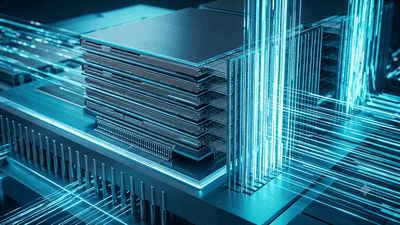
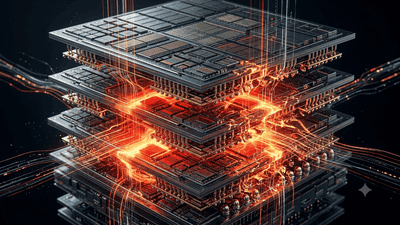
HBM adds complexity: 3D stacking through TSVs, advanced packaging (sometimes with silicon interposers), and tight integration with GPUs or AI accelerators. These additional steps increase per‑unit processing time and equipment requirements, but the underlying wafer starts often draw from the same pool as traditional DRAM.
As a result, growth in HBM output tends to divert wafers, tools, and engineering attention away from commodity DRAM, especially in constrained CapEx environments where total wafer input cannot be expanded freely.
Defining the crowding out effect
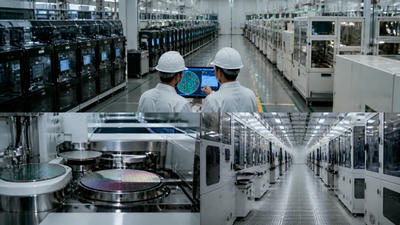
The “crowding out effect” in this context means the reduction in potential traditional DRAM bit output caused by reallocating manufacturing resources to HBM. It can be expressed in several ways:
One metric is wafer crowding out: the number of wafers used for HBM that would otherwise be used for standard DRAM. Another is bit‑equivalent crowding out: how many gigabits (Gb) of traditional DRAM capacity could have been produced using the same wafer and tool resources allocated to HBM.
We can also look at investment crowding out: portions of CapEx for lithography, etch, metrology, and packaging that are dedicated to HBM, thereby limiting the ability to expand commodity DRAM capacity even if wafer starts remain similar.
Estimating wafer allocation: an order‑of‑magnitude view
To create a quantitative estimate, we start with a simple assumption: in 2026, leading DRAM vendors allocate a meaningful minority of their DRAM‑class wafer capacity to HBM. Hypothetically, suppose a large vendor dedicates 10–20% of its relevant wafer starts to HBM products, reflecting AI‑accelerator demand and strategic priority.
This 10–20% share is not exact, but it is a plausible order‑of‑magnitude figure for vendors where HBM has become a major revenue driver. In a more conservative scenario, the share might be closer to 5–10%; in more aggressive, AI‑centric strategies, it could reach or exceed 20% for specific lines.
Using such ranges allows us to estimate how much traditional DRAM bit output is foregone due to HBM allocation, even though actual numbers vary by supplier.
Bit density and process differences: HBM vs standard DRAM

HBM dies often use advanced nodes similar to or slightly ahead of mainstream server DRAM, but their effective bit density per wafer can differ due to die size, redundancy, and architecture choices. HBM stacks are built from multiple DRAM dies (e.g., 8‑high or 12‑high stacks), but each die is typically larger and more complex than a commodity DRAM die.
From a wafer‑level perspective, the number of usable DRAM bits produced for HBM per wafer can be comparable to or somewhat lower than what would be produced for traditional DRAM, due to larger die sizes and yield-related overhead. At the same time, HBM units command much higher ASPs and margin per bit, incentivizing vendors to accept lower bit‑per‑wafer metrics in exchange for better economics.
For crowding out analysis, we can assume that 1 wafer devoted to HBM could have produced on the order of a similar magnitude of DRAM bits if used for standard DRAM, recognizing that exact ratios depend on die size and yield specifics.
Scenario modeling: translating wafer share into bit share
Consider a simplified scenario for 2026. Take a representative DRAM vendor with capacity to produce enough wafers to generate 100 hypothetical “units” of DRAM bits if all wafers were used for traditional DRAM. Now assume that 15 units of wafer capacity are allocated to HBM.
If we assume similar bit‑per‑wafer potential, those 15 units of wafer capacity correspond to roughly 15 units of traditional DRAM bits that are not produced. In this scenario, HBM “crowds out” about 15% of potential traditional DRAM bit output at that vendor.
Extrapolated across the industry, if aggregate wafer allocation to HBM in 2026 is in the high single‑digit to low double‑digit percentage range, the crowding out effect in bit terms would also fall roughly in that 5–15% band, with higher values in aggressive AI‑driven strategies.
Adjusting for HBM process complexity

The above estimate assumes similar bit‑per‑wafer efficiency, but HBM’s process complexity can reduce effective DRAM bits per wafer compared with commodity DRAM. Additional TSV formation, die stacking constraints, and conservative design margins can reduce per‑wafer yield in bit terms.
Suppose HBM processes achieve, on average, 80–90% of the bit‑per‑wafer efficiency of conventional DRAM due to larger die sizes and structural overhead. In that case, the crowding out effect becomes slightly larger in bit‑equivalent terms: 15 wafers devoted to HBM might equate to 15–17 wafers’ worth of traditional DRAM bits forgone.
Under such assumptions, a 10–15% wafer allocation to HBM in 2026 could translate to roughly 10–18% crowding out of commodity DRAM bit capacity relative to a world where all wafers were allocated to traditional DRAM.
Segment‑specific impacts: server vs PC/mobile DRAM
HBM’s crowding out effect does not impact all DRAM segments equally. Vendors often prioritize HBM and high‑end server DRAM on their most advanced nodes, while PC and mobile DRAM may use a mix of leading and slightly older nodes.
In practice, HBM wafer allocation tends to compete most directly with server DRAM wafer allocation, because both target high‑performance workloads and use similar process technologies. PC and mobile DRAM, especially on mature nodes, may see less direct crowding out but can still be indirectly affected by overall capacity and investment decisions.
This means that, in 2026, server DRAM capacity may bear a disproportionate share of the crowding out effect, potentially tightening supply or slowing capacity growth relative to what AI‑neutral planning would produce.
Investment crowding out: tools and CapEx priorities
Beyond wafers, HBM’s rise influences how memory makers allocate equipment and CapEx. HBM manufacturing requires specialized packaging tools, TSV processing equipment, and advanced test capabilities. Investments in these areas can reduce funds available for expanding or upgrading conventional DRAM lines.
If a vendor dedicates a sizable share of annual CapEx—say 20–30% of DRAM‑related investment—to HBM‑specific equipment and associated lines, this can constrain the pace of commodity DRAM node transitions or capacity expansions. Even if wafer starts remain similar, the most advanced toolsets may be reserved for HBM, slowing DRAM modernization.
In quantitative terms, investment crowding out could mean a delayed or scaled‑back DRAM node transition, resulting in lower bit output per wafer across the DRAM portfolio than would be possible with a more DRAM‑centric CapEx plan.
Macro‑level estimate for 2026: a plausible range
Pulling these strands together, we can propose a plausible range for HBM’s crowding out effect on traditional DRAM capacity in 2026, expressed as a percentage of potential DRAM bits if HBM were absent.
Assuming industry‑level HBM wafer allocation in the high single‑digit to low double‑digit percentage range, and factoring in slightly lower bit‑per‑wafer efficiency for HBM, a reasonable estimate is that HBM crowds out roughly 8–15% of potential traditional DRAM bit capacity in 2026.
Under more aggressive scenarios—where AI demand drives higher HBM wafer shares and CapEx is strongly skewed toward HBM—the crowding out effect could push toward the upper end of that range or modestly beyond it, perhaps approaching 18–20% for specific vendors or nodes.
Price and supply implications
The crowding out effect has tangible implications for DRAM pricing and supply. When a non‑trivial portion of potential DRAM capacity is diverted to HBM, commodity DRAM supply growth slows relative to demand growth, especially in segments such as servers where HBM and DRAM compete for similar manufacturing resources.
This can support firmer DRAM pricing than would exist if all wafers were devoted to commodity DRAM. While overall memory markets remain cyclical, HBM’s structural demand and higher margins incentivize sustained allocations that keep traditional DRAM from becoming excessively oversupplied, moderating price declines or contributing to earlier recoveries in upturns.
For buyers, this means that DRAM price trajectories in 2026 and beyond must be interpreted in light of HBM production trends, not just end‑demand for conventional DRAM devices.
Feedback loops: DRAM prices vs HBM investment
There is also a feedback loop between DRAM prices and HBM investment. If DRAM prices remain relatively strong due to crowding out, memory makers may find it economically viable to maintain or modestly increase DRAM allocations, tempering the crowding out effect. Conversely, if HBM continues to deliver superior margins and strategic value in AI markets, vendors may push more capacity toward HBM, accepting tighter DRAM supply.
This dynamic suggests that the crowding out effect is not static; it evolves as vendors adjust their strategies in response to market prices, AI demand, and competitive positioning. Quantitative estimates must therefore be updated regularly rather than treated as fixed truths.
Nonetheless, recognizing that such feedback loops exist helps planners anticipate how changes in AI workloads and memory pricing can alter future crowding out levels.
Planning implications for data centers and OEMs
Data centers and OEMs that rely on both traditional DRAM and HBM must consider crowding out when planning capacity and procurement. If HBM demand is expected to grow rapidly, they should anticipate that traditional DRAM supply growth may be comparatively slower, especially on advanced nodes and high‑density server modules.
This planning can take several forms: securing long‑term DRAM contracts, diversifying suppliers, or designing systems that can tolerate price and lead‑time variability. In AI‑heavy environments, balancing investments between HBM‑rich accelerators and DRAM‑rich CPU nodes becomes part of TCO optimization.
Understanding that a portion of DRAM “shortage” or constrained capacity is structurally linked to HBM allocation—rather than purely to cyclical cuts—helps avoid misinterpreting market signals and supports more accurate medium‑term planning.
Limitations and uncertainties in the estimate
Any quantitative estimate of HBM’s crowding out effect in 2026 faces limitations. Detailed wafer allocation, yield data, and CapEx breakdowns are proprietary. Different vendors pursue different strategies: some may sharply prioritize HBM, while others maintain more balanced DRAM portfolios.
Moreover, HBM itself may be produced on lines that are not perfectly substitutable with all DRAM lines, especially where packaging and TSV structures constrain reallocation. In such cases, the crowding out effect is more nuanced than a simple percentage of wafers.
For these reasons, the ranges presented here should be viewed as indicative and scenario‑based rather than precise. They nonetheless provide a useful framework for thinking about magnitude and direction, anchoring qualitative discussions in quantitative intuition.
Conclusion: a meaningful but bounded structural shift
In 2026, HBM’s rapid rise introduces a meaningful, structurally driven crowding out effect on traditional DRAM capacity. While the exact numbers vary by vendor and node, a reasonable order‑of‑magnitude estimate suggests that HBM reallocations reduce potential commodity DRAM bit output by roughly 8–15%, with higher values possible under aggressive AI‑centric strategies.
This crowding out does not eliminate DRAM growth, but it reshapes its trajectory and must be factored into expectations about supply, pricing, and technology planning. For memory makers, HBM offers compelling economics and strategic relevance; for DRAM buyers, it represents an invisible competitor for manufacturing resources. Recognizing and quantifying this relationship is essential to understanding the evolving balance between HBM and traditional DRAM in the AI‑driven memory landscape of 2026.