Chinese Memory Module Makers Gain Global Market Share Against the Odds
In the span of a decade, Chinese memory module makers have moved from relative anonymity on the global stage to becoming recognized competitors in DRAM and NAND module markets worldwide. Against the odds—facing technology barriers, brand perception challenges, and geopolitical headwinds—they have steadily gained share in PCs, servers, mobile devices, and consumer electronics. Their rise is reshaping the competitive landscape, supply chain dynamics, and price–performance expectations in the memory ecosystem.
This blog post explores how Chinese memory module makers have grown their global presence, the strategies they used to overcome structural disadvantages, and what their ascent means for customers, incumbents, and the future of the industry.
Starting from a perceived disadvantage
For many years, the global memory module market was dominated by a handful of well‑known brands from Korea, Taiwan, Japan, and the United States. These companies benefited from deep integration with major DRAM and NAND producers, established channel relationships, and strong consumer and enterprise brand recognition.
Chinese module makers entered the scene with several perceived disadvantages: limited access to cutting‑edge die supplies, less experience with high‑performance server and enterprise modules, and weaker reputations in overseas markets. They also faced implicit skepticism about quality and support compared with long‑standing global brands.
Despite these challenges, they focused on niches where they could compete, gradually expanding their capabilities and customer bases while building trust through consistent delivery and increasingly sophisticated products.
Leveraging domestic demand as a springboard
China’s vast domestic market played a crucial role in the growth of its memory module makers. With large PC, mobile, and industrial sectors, and rapidly expanding data center and cloud infrastructure, local demand provided a fertile environment for these companies to scale production and refine their offerings.
Serving domestic OEMs and system integrators allowed module makers to iterate quickly on product designs, firmware tuning, and quality control. Feedback cycles were short, and partnerships with local brands helped them understand real‑world requirements in consumer and commercial deployments.
As they matured at home, these companies gained the confidence, volume base, and operational discipline needed to pursue overseas opportunities, using domestic success as a springboard into global markets.
Cost competitiveness and flexible positioning
Cost competitiveness has been a core advantage for many Chinese memory module makers. By optimizing manufacturing, logistics, and overhead, they can offer modules at attractive price points while meeting basic quality and performance standards. This has made them appealing in cost‑sensitive segments such as entry‑level PCs, office desktops, and value‑oriented consumer devices.
However, their strategy is not purely about low cost. Many have adopted flexible positioning, offering a range of modules—from budget lines to high‑performance gaming and workstation products—tailored to different price and performance tiers. They often respond quickly to market shifts, introducing new capacity points or configurations in response to OEM and channel requests.
This combination of competitive pricing and responsive product development has helped them win share both in emerging markets and in more mature regions seeking alternatives to traditional suppliers.
Building technical capabilities and quality systems
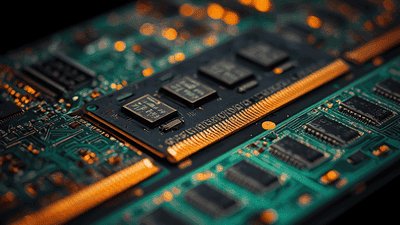
Gaining global market share required Chinese module makers to move beyond basic assembly. Over time, they invested in technical capabilities, including advanced PCB design, signal integrity analysis, thermal management, and firmware development. These competencies are essential for higher‑speed DDR4 and DDR5 modules and for performance‑sensitive SSDs and embedded storage.
Quality systems have also improved significantly. Companies adopted stringent testing regimes—burn‑in tests, compatibility validation across diverse motherboards and platforms, and extended reliability evaluations. Many pursued international certifications and implemented traceability and quality management systems expected by global OEMs.
These technical and quality advances helped dispel earlier perceptions that Chinese modules were suitable only for low‑end applications, enabling them to compete credibly in mid‑range and, increasingly, higher‑end segments.
Diversifying product portfolios: DRAM, SSDs, and embedded storage
Chinese memory module makers have diversified their portfolios beyond traditional DRAM DIMMs. Many now offer SSDs using both SATA and NVMe interfaces, as well as embedded storage solutions such as eMMC and UFS for mobile and IoT devices. This diversification allows them to participate in broader memory and storage markets and to offer more complete solutions to OEMs.
In DRAM, they cover client, server, and gaming modules, with capacities and speeds aligned to mainstream platform requirements. In SSDs, they provide drives for consumer PCs, industrial systems, and sometimes data center use, focusing initially on value and mainstream performance tiers.
By offering both DRAM and NAND‑based products, they deepen relationships with customers, who can source multiple memory and storage components from the same vendor, simplifying supply management and negotiations.
Channel strategy: partnerships, branding, and white‑label models

Channel strategy has been crucial in gaining global share. Some Chinese memory module makers have pursued direct branding, building their own names in retail and online markets. They invest in marketing, sponsorships, and customer support to position themselves as recognizable alternatives to established brands.
Others adopt white‑label or OEM approaches, supplying modules that are rebranded by local or international partners. This model allows them to tap into existing distribution networks and brand trust without needing to build their own retail presence from scratch.
In many cases, they use a hybrid approach: combining direct branded products in certain regions with OEM supply to system builders and integrators elsewhere. This flexibility helps them navigate differing market conditions and regulatory environments while steadily increasing the footprint of their hardware.
Supply chain access and relationships with DRAM/NAND producers
Access to DRAM and NAND die is a critical factor for any module maker. Chinese companies have worked to establish stable relationships with major memory producers, as well as with local foundries and packaging partners. Over time, they have moved from opportunistic spot purchasing toward more structured agreements that enhance predictability.
In some cases, they benefit from strategic initiatives aimed at diversifying global supply chains, as memory producers seek broader customer bases and regional partners. As their volumes and reliability grow, they become more attractive customers, improving their ability to secure consistent die supplies at competitive terms.
This progress helps them avoid being relegated to the least desirable or most volatile supply channels, strengthening their capacity to support long‑term global customers.
Competing on performance: gaming, content creation, and prosumer segments
While cost and mainstream markets form the foundation of their growth, Chinese memory module makers increasingly compete in performance‑oriented segments such as gaming PCs, content creation workstations, and prosumer devices. In these areas, latency, bandwidth, and thermal characteristics are closely scrutinized by users.
To address this, they develop high‑frequency DDR4 and DDR5 modules, often with optimized PCB layouts and heat spreaders, and partner with motherboard vendors to ensure compatibility and support XMP/EXPO or equivalent profiles. They may also release SSDs tuned for faster game loading and creative workflows.
Success in these segments not only boosts margins but enhances brand prestige, signaling that their engineering and quality can meet demanding use cases and not just value‑oriented ones.
Regulatory and geopolitical headwinds
Chinese memory module makers have gained share “against the odds” partly because they must navigate regulatory and geopolitical headwinds. Trade restrictions, export controls, and shifting policy environments can disrupt supply chains or limit access to certain markets and technologies.
Companies respond by diversifying manufacturing locations, exploring partnerships outside China, and carefully managing compliance and certification. They may tailor product lines and sales strategies to align with regional regulations, hedging risks where possible.
While such headwinds pose challenges, they also encourage strategic resilience. Firms that successfully adapt gain experience and flexibility that can become long‑term advantages relative to less agile competitors.
Implications for global incumbents and customers
The rise of Chinese memory module makers has several implications for incumbent brands. Increased competition in both low‑end and mid‑range segments puts pressure on pricing and forces incumbents to emphasize differentiation—such as advanced performance, specialized enterprise features, or software and ecosystem integration.
For customers, the expanded supplier base offers more choice. OEMs and system builders can negotiate better terms, diversify their risk by sourcing from multiple regions, and experiment with new product mixes. Some may adopt Chinese modules as secondary or backup suppliers initially, then expand usage as confidence in quality and support grows.
Over time, this competition can lead to broader availability of high‑capacity and high‑performance memory at more accessible price points, benefiting end users in both consumer and professional markets.
Challenges ahead: technology pace and brand perception
Despite their progress, Chinese memory module makers face ongoing challenges. Keeping pace with rapid technology transitions—DDR5 evolution, higher‑layer 3D NAND, new interfaces and standards—requires continuous investment in R&D and close coordination with upstream suppliers.
Brand perception remains another hurdle, especially in markets where customers are accustomed to legacy memory brands. Convincing enterprise and data center buyers to rely on newer entrants for mission‑critical workloads demands strong evidence of reliability, support, and long‑term commitment.
Addressing these challenges will determine how far and how fast they can move beyond cost‑driven segments into premium and strategically sensitive markets.
Strategic pathways: specialization, integration, and ecosystems
Looking forward, Chinese memory module makers can pursue several strategic pathways. Specialization is one option: focusing on particular verticals such as industrial, automotive, or edge AI, where tailored solutions and long‑term support matter more than sheer scale. Integration is another path: offering combined memory and storage packages, or collaborating closely with local CPU, GPU, and motherboard vendors to create optimized platforms.
Building ecosystems around their products—developer tools, firmware updates, compatibility programs—can further differentiate them and make their offerings attractive beyond price considerations alone. Strategic partnerships, both inside and outside China, will likely play key roles in these evolutions.
These pathways underscore that gaining global market share is not a static achievement; it is a step toward deeper participation in the broader computing and electronics ecosystem.
Conclusion: reshaping the global memory landscape
Chinese memory module makers have gained global market share against the odds by combining cost competitiveness, rapid learning, and increasingly sophisticated technical and quality capabilities. Their ascent adds new dimensions to the memory market, expanding supplier choices and prompting incumbents to refine their strategies.
As they continue to evolve, their influence will grow not only in commodity segments but in performance, embedded, and specialized markets. For the global memory industry, this means a more diverse, dynamic landscape—one in which innovation, resilience, and collaboration will matter as much as manufacturing scale in determining who thrives in the years ahead.