
Big Memory Makers’ "Second Curve": The Commercialization Year for CXL Memory Modules
For decades, the growth trajectory of major DRAM and memory manufacturers has followed a familiar pattern: scale capacity, shrink process nodes, and ride the cyclical waves of server, PC, and mobile demand. That is the “first curve” of their business, built on selling DIMMs, mobile DRAM, and conventional modules directly attached to CPUs and SoCs. Now, a “second curve” is emerging—one that centers on Compute Express Link (CXL) and, more specifically, on CXL memory modules as commercial products.
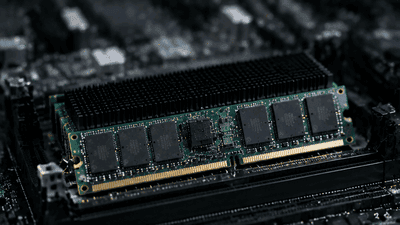
This blog post explores why CXL memory modules are becoming the commercialization focal point for big memory makers, what distinguishes this second curve from the traditional DRAM business, and how the year of commercialization is changing strategies across product, ecosystem, and go‑to‑market dimensions.
From first curve to second curve in memory
The “first curve” for big memory makers has been driven by selling commodity and specialty DRAM into well‑defined sockets: DIMMs in servers and PCs, LPDDR in mobile devices, and graphics DRAM in GPUs and consoles. Growth came from higher densities, new standards (DDR3/4/5, LPDDR generations), and expanding device categories. While product complexity increased, the underlying model remained: memory closely tied to a specific host, with capacity largely fixed at purchase time.
The “second curve” introduces a different paradigm. CXL memory modules are designed not as fixed, per‑socket expansions but as resources in pooled, composable infrastructures. Instead of shipping DIMMs that system builders slot into dedicated channels, big memory makers now offer modules that attach via CXL to a fabric, enabling dynamic allocation of memory across multiple hosts. This shift from static attachment to fabric‑connected memory turns memory into a serviceable, shareable resource, broadening both technical and commercial possibilities.
For leading memory vendors, embracing this second curve means expanding beyond being component suppliers to becoming architects of memory services and infrastructure, with CXL memory modules as a cornerstone product.
What makes CXL memory modules commercially distinct

CXL memory modules differ from traditional DRAM modules in several key ways. Technically, they connect to host CPUs and accelerators over CXL links, using coherent or memory‑expansion protocols rather than the legacy DDR interface. They often incorporate controllers, firmware, and management interfaces that expose memory capacity as part of a pooled or extended address space.
Commercially, these modules are positioned as infrastructure building blocks for data centers rather than simple upgrades for individual servers. Their value proposition includes dynamic scaling, better utilization of memory across clusters, and new forms of disaggregated or composable architectures. Pricing, support contracts, and integration models look more like those of storage arrays or networking gear than commodity DIMMs.
As a result, the commercialization year for CXL memory modules is not just about adding a new SKU; it is about entering a new product category where memory is sold as part of fabric‑connected systems and services.
Why big memory makers see CXL as their second curve
Several forces push big memory makers toward treating CXL memory modules as a second curve. First, data center customers increasingly demand flexibility and better resource utilization. Traditional server‑centric memory provisioning leads to stranded capacity and over‑provisioned DRAM. CXL memory pools promise higher utilization, which appeals to hyperscalers and large enterprises.
Second, AI and data‑intensive workloads amplify memory requirements and variability. Different workloads have different memory footprints over time, and static provisioning can be inefficient. CXL memory modules allow data centers to adjust memory capacity per host as workloads shift, offering a compelling, differentiated product for memory vendors.
Third, competition and commoditization in conventional DRAM markets encourage search for higher‑margin, more strategic offerings. By moving up the stack and providing CXL‑based memory infrastructure, big memory makers can participate more directly in data center design decisions and capture value beyond raw bits.
Together, these dynamics make CXL memory modules an attractive second growth curve, offering both new revenue streams and deeper strategic engagement with key customers.
The commercialization year: from roadmap to reality
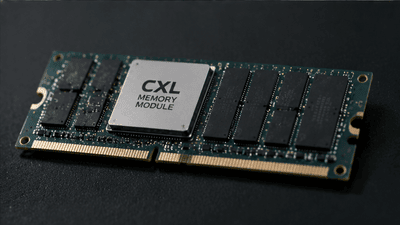
The commercialization year for CXL memory modules is the moment when products move from limited pilot deployments and roadmap slides to broadly available offerings with standard SKUs, support processes, and reference architectures. In this phase, big memory makers finalize module designs, secure interoperability with major CPU and platform vendors, and launch go‑to‑market programs aimed at hyperscalers, OEMs, and large enterprises.
Commercialization involves practical steps: securing production capacity, defining product tiers (e.g., capacity points, performance classes), building management and monitoring tools, and establishing integration guides for system architects. It also requires packaging offerings with service and support commitments, since CXL memory modules directly affect mission‑critical workloads.
For memory vendors, this year is a test of readiness—whether they can scale beyond early adopters to serve a broader market with predictable availability, mature firmware, and clear value propositions.
Product strategies: capacity, performance, and tiers
As CXL memory modules enter commercialization, big memory makers are defining product strategies that mirror other infrastructure components. They segment offerings by capacity (e.g., hundreds of gigabytes to multiple terabytes per module), performance characteristics, and supported CXL protocol modes.
Some modules target pure memory expansion: providing large pools of volatile memory accessible at latencies close to DRAM, ideal for in‑memory databases, analytics, and AI training. Others may emphasize memory pooling and sharing across hosts, optimized for multi‑tenant environments and composable infrastructure platforms.
Over time, vendors may introduce specialized tiers: high‑performance modules with tighter latency and bandwidth guarantees, value‑oriented modules for general capacity expansion, and hybrid designs that integrate memory with limited compute or data services. This tiering allows them to match module characteristics to diverse workload needs and price points.
Integration with server and accelerator ecosystems
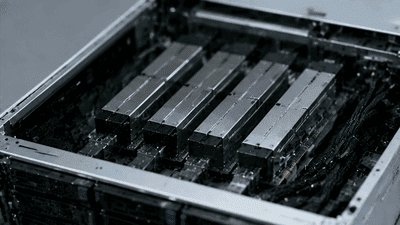
Commercial success for CXL memory modules depends heavily on integration with server and accelerator ecosystems. Big memory makers collaborate closely with CPU vendors, GPU and accelerator designers, and server OEMs to ensure that CXL memory is recognized, configured, and used effectively by system firmware and software.
Integration work includes defining how CXL memory appears in host memory maps, how operating systems and hypervisors allocate and manage it, and how applications can leverage expanded memory spaces. It also involves interoperability testing across different CXL generations and topologies, including direct attach, switched fabrics, and multi‑host scenarios.
These efforts turn CXL memory modules from standalone hardware into components of a coherent ecosystem. The commercialization year is when such integration moves from lab validation to standardized support in major platforms, making CXL memory a viable choice in mainstream deployments.
Data center architecture shifts driven by CXL memory
As CXL memory modules become commercially available, they catalyze shifts in data center architecture. Traditional designs built around fixed server configurations give way to models where compute, storage, and memory are pooled and composed dynamically. CXL memory modules enable memory pools that can be assigned to servers on demand, allowing data centers to match memory allocation more closely to workload requirements.
Architects can design clusters where certain racks host concentrated CXL memory pools, while others focus on compute or storage, all connected by CXL‑capable fabrics. This disaggregation reduces stranded capacity, simplifies upgrades, and can improve overall utilization.
In AI and data analytics environments, CXL memory modules support large working sets near compute, reducing reliance on slower storage tiers and complex caching schemes. Over time, these architectural changes may become standard practice, with CXL memory playing a central role alongside CPU and accelerator choices.
Business models: from component sales to solutions
Embracing CXL memory modules as a second curve also pushes big memory makers toward new business models. Instead of purely selling components to OEMs, they increasingly position themselves as solution providers, offering reference architectures, design services, and software integration support.
Some may bundle CXL memory modules with consulting on data center modernization, helping customers design and deploy memory pooling strategies that align with their workloads. Others may collaborate with software vendors to create certified stacks that leverage CXL memory for specific applications—databases, analytics platforms, or AI frameworks.
These solution‑oriented models can command higher margins and deepen relationships with strategic customers. They also differentiate memory vendors from pure bit suppliers, elevating their role in infrastructure decisions and reinforcing the second curve’s strategic significance.
Risks and challenges in commercialization
Despite the promise of CXL memory modules, commercialization carries risks. Technical maturity is a key concern: firmware bugs, performance variability, or interoperability issues can undermine confidence and slow adoption. Given that CXL memory sits close to core workloads, any instability can have outsized impact.
Market timing also matters. If memory makers invest heavily in CXL modules before ecosystems and customer demand are ready, they may face slow uptake and underutilized capacity. Conversely, moving too late could cede ground to competitors or alternative solutions.
Pricing and value communication present additional challenges. Customers must understand how CXL memory modules improve utilization, performance, or TCO compared with simply adding more DRAM per server or scaling clusters conventionally. Clear models and case studies are needed to justify investment.
Competitive dynamics among big memory makers
The commercialization year for CXL memory modules intensifies competitive dynamics among major memory players. Each vendor strives to demonstrate leadership in CXL capabilities, forging early partnerships with key cloud providers and OEMs. Design wins in flagship deployments can set expectations and influence broader market perception.
Competition extends beyond hardware specifications to software support, management tools, and interoperability efforts. Vendors that offer well‑integrated solutions with monitoring, orchestration, and security features may gain advantage over those providing bare‑bones modules.
At the same time, collaborative efforts—standardization, joint reference architectures—remain important. The success of CXL memory as a category depends on broad ecosystem confidence, which can be undermined by fragmented or incompatible implementations. Balancing competition and collaboration is part of the strategic calculus in this second curve.
Implications for customers and planners
For data center customers and infrastructure planners, the commercialization of CXL memory modules introduces both opportunities and choices. They can consider new architectures that treat memory as a pooled resource, potentially reducing over‑provisioning and improving flexibility. They can also evaluate how CXL memory fits into existing investments in servers, storage, and networking.
Planners must assess workload characteristics—memory intensity, latency sensitivity, multi‑tenant patterns—to determine where CXL memory adds the most value. They should also examine vendor roadmaps and support commitments, ensuring that chosen modules integrate smoothly with their platforms and management tools.
Adoption strategies may involve phased deployment: starting with pilot projects or specific workloads that benefit from memory pooling, then expanding as experience and confidence grow. In this way, customers can participate in the second curve while managing risk carefully.
Looking ahead: evolution beyond the commercialization year
The commercialization year for CXL memory modules is a starting point, not an endpoint. Over time, products will evolve through higher capacity points, improved latency characteristics, and deeper integration with composable infrastructure platforms. Standards will mature, software support will broaden, and usage patterns will become more refined.
Big memory makers will likely explore adjacent opportunities, such as combining CXL memory with persistent memory technologies, integrating limited compute near memory for specialized tasks, or offering cloud‑like consumption models for on‑premises memory pools. These innovations could further extend the second curve, making CXL memory a core pillar of future data centers rather than a niche add‑on.
For the industry as a whole, the shift underscores a broader trend: memory is moving from being a static component to a dynamic, fabric‑connected resource. The commercialization of CXL memory modules marks a key step along that path, and big memory makers’ embrace of this second curve will shape how enterprise infrastructure evolves in the coming years.