2026 Global DRAM Market Share Evolution: Samsung, SK Hynix, Micron
By 2026, the global DRAM industry remains highly concentrated around three familiar names: Samsung, SK Hynix, and Micron. Together, they still account for the vast majority of worldwide DRAM supply, but the balance of power among them is far from static. Changes in technology mix, product focus, regional demand, and strategic bets on emerging segments such as high‑bandwidth memory (HBM) and DDR5 have continued to reshape their respective positions.
This blog post examines how the global DRAM market share configuration has evolved into 2026, focusing on the trajectories of Samsung, SK Hynix, and Micron. Rather than attaching specific numerical shares—which can vary by source and quarter—we will concentrate on structural trends: which segments each vendor has prioritized, where they have gained or ceded ground, and how their strategies interplay in a market increasingly shaped by AI, cloud computing, and advanced client platforms.
The global DRAM landscape in 2026
DRAM remains a foundational component of modern computing. From smartphones and PCs to servers, networking gear, and AI accelerators, DRAM provides the working memory that underpins performance and responsiveness. Despite the rise of specialized memories such as HBM and various forms of non‑volatile storage, mainstream DRAM—LPDDR, DDR, and GDDR—continues to represent a large portion of semiconductor memory revenue.
In 2026, global DRAM demand is driven by three primary engines. First is cloud and enterprise computing, where servers and data centers consume ever‑larger DRAM capacities per node to support virtualization, databases, microservices, and AI workloads. Second is mobile, with smartphones and tablets deploying increasing amounts of LPDDR to handle multitasking, rich media, and on‑device AI. Third is PCs and high‑performance client systems, where DDR5 and gaming‑oriented memory configurations expand the need for high‑speed modules.
Against this backdrop, Samsung, SK Hynix, and Micron maintain their roles as core DRAM suppliers. Yet their relative strengths and weaknesses differ by segment, and their strategic moves in areas like HBM and advanced nodes have shifted perceptions of their market positions, even when headline share numbers change only gradually.
Samsung: scale, breadth, and diversification

Samsung has long been the largest DRAM producer by output, and in 2026 it still leverages unmatched scale across both commodity and specialized products. Its DRAM portfolio spans mobile LPDDR, server DDR5, client DDR5, graphics GDDR, and high‑bandwidth solutions, complemented by a broad foundry and logic business that provides synergies with system‑level design.
In the years leading up to 2026, Samsung has focused on several strategic pillars. One is node leadership: pushing DRAM to advanced process nodes that lower power and cost per bit. Another is broad participation in emerging standards, ensuring it has early support for DDR5, LPDDR5X and beyond, and next‑generation graphics memory. A third is integrating DRAM production with its own system businesses—smartphones, consumer electronics, and in some cases server platforms—creating captive demand and feedback loops that stabilize volume.
Samsung’s market share evolution through 2026 reflects the tension between these strengths and new competitive pressures. On the one hand, its scale allows it to maintain significant share across virtually all major DRAM segments. On the other, the rapid rise of specialized HBM markets and the strong focus of competitors on AI‑centric memory has reduced the uniqueness of Samsung’s position in some high‑value areas, even if its overall share remains high.
SK Hynix: the HBM and high‑performance champion
SK Hynix has carved out a distinctive role in the DRAM industry by leaning heavily into high‑performance memory and advanced packaging. In particular, it has become synonymous with HBM in many discussions about AI and accelerator platforms, thanks to its early and sustained investment in stacked memory technologies and close partnerships with GPU and accelerator vendors.
By 2026, SK Hynix’s DRAM business spans traditional products—LPDDR, DDR5, GDDR—but its brand strength and strategic narrative are especially strong in HBM and high‑speed graphics memory. This focus has helped it gain share in segments tied to AI training clusters, high‑end graphics, and data‑center accelerators, where HBM bandwidth and efficiency are critical differentiators.
SK Hynix’s market share evolution reflects this specialization. Even if its overall share of total DRAM bits is smaller than Samsung’s, it can command significant influence in the most lucrative, performance‑sensitive segments. As AI adoption expands and HBM content per accelerator grows, SK Hynix’s share of revenue in high‑end memory categories has likely risen relative to its share of mature commodity DRAM, changing its internal mix and improving its profitability profile.
Micron: balancing innovation with portfolio breadth
Micron occupies a unique position as a major global DRAM and NAND supplier headquartered in the United States, with manufacturing and R&D spanning multiple regions. Its strategy through 2026 has centered on balancing innovation in advanced memory types with pragmatic portfolio management across PCs, mobile, and servers.
On the DRAM side, Micron has invested in DDR5, LPDDR5X, and GDDR6 to serve both mainstream and performance‑oriented markets. It has also pursued HBM and other specialized memory forms, though its public positioning in HBM may not be as dominant as SK Hynix’s in some AI contexts. Micron’s broader memory portfolio, including NAND and emerging technologies, complements its DRAM offerings, allowing it to offer integrated solutions to system vendors.
Micron’s market share evolution into 2026 reflects a focus on profitability and technology positioning rather than simply chasing volume at any cost. In some cycles, it has taken disciplined stances on capacity and pricing, which can temper headline share growth but support margins. Its share is therefore best understood in context: strong presence in key DRAM segments, substantial influence in server and PC memory, and growing participation in AI‑related memory even if its HBM narrative is less prominent than that of SK Hynix.
Technology mix: DDR5, LPDDR5X, GDDR, and HBM
One of the most important axes of DRAM market share evolution in 2026 is technology mix. DDR5 has become mainstream in servers and high‑end PCs, LPDDR5X and other advanced mobile DRAM are common in flagship smartphones, and high‑speed graphics memory supports GPUs and gaming consoles. In parallel, HBM has grown rapidly as a specialized but highly important segment for AI and high‑performance computing.
Samsung’s scale allows it to maintain significant share across all these technologies, ensuring that it remains a default choice for many OEMs and system builders. SK Hynix, while present in traditional DRAM segments, stands out more in HBM and high‑end graphics, where its technology and packaging capabilities have driven design wins. Micron, meanwhile, has sought to differentiate with strong DDR5 and LPDDR offerings and to participate effectively in HBM and graphics memory as those markets mature.
Because each vendor’s share is different in each segment, overall global DRAM share numbers can obscure important shifts within the mix. For example, a vendor might maintain similar overall share year‑over‑year but significantly change its internal composition, with more revenue coming from high‑performance segments and less from commodity PCs or mobile. In 2026, this mix shift is a key story: how share within DDR5, LPDDR5X, GDDR, and HBM evolves can be more strategic than headline totals.
AI and HBM: a new axis of competition
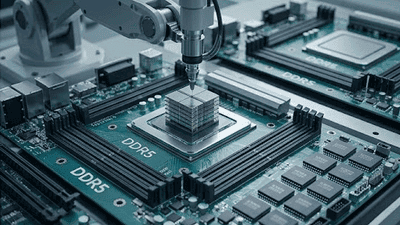
The rise of AI and accelerated computing has transformed DRAM competition by elevating HBM and other high‑bandwidth solutions from niche to central importance. GPUs, custom accelerators, and advanced CPUs increasingly rely on HBM stacks to feed their cores with data at rates that traditional DDR cannot match. This creates a new axis of competition: not simply who sells the most DRAM bits, but who supplies the memory behind AI’s most critical platforms.
SK Hynix’s strong HBM presence has given it considerable strategic leverage in this area. Design wins with leading GPU vendors and cloud providers position it as a default choice for many AI clusters. Samsung and Micron also participate in HBM, with Samsung leveraging its packaging experience and Micron pursuing its own HBM roadmap and partnerships. Each vendor’s share of the HBM segment thus serves as a proxy for their influence in AI infrastructure, independent of broader DRAM metrics.
By 2026, the competitive dynamics in HBM likely contribute to subtle shifts in overall DRAM share as well. Vendors with strong HBM portfolios may capture more of the revenue growth tied to AI spending, even if their unit share in commodity DRAM changes modestly. Conversely, vendors that move more slowly in HBM could see their share skew toward segments with slower growth or more intense price pressure.
Regional demand and geopolitical considerations
Global DRAM market share evolution is also shaped by regional demand patterns and geopolitical factors. North American and European data‑center investments, Asian smartphone and PC markets, and emerging AI initiatives worldwide all influence where and how DRAM is consumed. Meanwhile, policy decisions related to semiconductor supply chains, export controls, and local manufacturing incentives affect vendor strategies and capacities.
Samsung and SK Hynix, with deep roots in South Korea and substantial global footprints, must navigate both domestic industrial policies and international supply chain considerations. Micron, based in the United States, interacts with U.S. policy frameworks that encourage domestic manufacturing and secure supply chains, while maintaining fabs and partnerships in other regions.
These factors can influence share indirectly. For example, local preferences or policy incentives might encourage certain vendors’ DRAM in specific markets. Long‑term contracts between memory vendors and regional champions can reinforce share patterns. In 2026, as concerns about supply chain resilience continue, such relationships and regional strategies play a role in shaping the evolution of market share beyond pure technology competitiveness.
Cyclicality, pricing, and capacity discipline
DRAM remains a cyclical industry. Periods of undersupply can push prices and margins higher, while oversupply leads to price corrections and profitability challenges. The way Samsung, SK Hynix, and Micron manage capacity and pricing during these cycles influences both their financial performance and their market share trajectories.
Vendors that pursue disciplined capacity expansions—aligning output with realistic demand projections—may sustain healthier margins even if they sacrifice some short‑term share. Those that aggressively expand capacity can win share when demand is strong but risk more painful adjustments when cycles turn. By 2026, all three leading DRAM makers have lived through multiple cycles and adjusted their management philosophies accordingly, balancing share ambitions with profitability goals.
These strategic choices show up in share evolution over time. A vendor choosing to prioritize profitability may allow some share erosion in low‑margin segments while strengthening its presence in more profitable categories. Another may try to defend share broadly, accepting margin volatility. Understanding 2026 DRAM market share therefore requires looking at these capacity and pricing strategies, not just at a static snapshot of share percentages.
Implications for buyers and ecosystem partners
For OEMs, cloud providers, and other memory buyers, the evolution of DRAM market share among Samsung, SK Hynix, and Micron has practical implications. Supplier diversity, negotiation leverage, and access to specific technologies all depend in part on how these vendors position themselves. A highly concentrated market can raise concerns about supply risk, but strong competition within key segments such as DDR5 and HBM can still provide buyers with choices.
Buyers evaluating DRAM suppliers in 2026 must consider more than just share. They should assess each vendor’s track record in reliability, support, and roadmap execution, particularly in segments like DDR5 and HBM that underpin critical systems. They should also watch how vendors allocate capacity among mobile, server, and specialty products, as these decisions affect availability and pricing.
Ecosystem partners—controller vendors, module makers, and system integrators—likewise need to track share evolution and segment strengths. Aligning product strategies with the directions taken by Samsung, SK Hynix, and Micron can help ensure timely component sourcing and design compatibility. In AI and advanced computing, close collaboration with memory vendors becomes especially important as HBM and related technologies mature.
Looking ahead: beyond 2026
By 2026, the global DRAM market share landscape centered on Samsung, SK Hynix, and Micron is both familiar and subtly transformed. The core players remain the same, but their internal mixes, technology emphases, and regional strategies have evolved to reflect an era dominated by AI, cloud computing, and advanced client platforms. DDR5, LPDDR5X, GDDR, and HBM have reshaped how share is distributed across segments, even if headline totals change incrementally.
Looking beyond 2026, further shifts are likely. New memory architectures, additional HBM generations, and deeper integration of memory into heterogeneous packages may create fresh competitive dynamics. Regional players and emerging technologies could add complexity to the market. Nevertheless, Samsung, SK Hynix, and Micron are poised to remain central to DRAM supply, with their strategies continuing to define how global DRAM share evolves.
For stakeholders across the ecosystem, the key is to see market share not as a static ranking but as a reflection of ongoing strategic choices—about technology, capacity, partnerships, and risk. Understanding how those choices have played out into 2026 helps inform expectations for the next phase of DRAM’s evolution in a rapidly changing computing world.