Converging Price Premium Between DDR4 and DDR5: The Switching Window Is Open
For several years after DDR5 first appeared, its higher price relative to DDR4 kept many buyers on the sidelines. Early adopters paid a clear generational premium for bandwidth, capacity headroom, and future‑proofing, while a large installed base continued to rely on mature DDR4 platforms. Today, that situation is changing. As manufacturing scales, competition intensifies, and platforms standardize around DDR5, the price gap between the two generations has narrowed to the point where it can be “converted” into performance and total‑cost‑of‑ownership (TCO) gains rather than seen as a pure cost penalty.
In other words, the switching window is open. The economics of moving from DDR4 to DDR5 are becoming favorable for a growing range of workloads and buyers, from data centers to high‑end workstations and even mainstream PCs. This article explores what it means to convert the price premium between DDR4 and DDR5, why the current moment offers a unique opportunity to switch, and how different stakeholders can evaluate and act on this window.
From generational premium to economic trade‑off
When DDR5 first launched, early modules were substantially more expensive than comparable DDR4 parts. The higher prices reflected new manufacturing processes, limited production volumes, and high initial demand from bleeding‑edge platforms. For many buyers, the premium outweighed the benefits, especially in environments where CPU and workload constraints meant memory bandwidth was not yet the bottleneck.
Over time, as DDR5 production ramped and more vendors entered the market, the cost curve began to bend. Process yields improved, supply chains stabilized, and platform support broadened. The raw price difference between DDR4 and DDR5 narrowed, shifting the conversation from “DDR5 is too expensive” to “does DDR5 deliver enough performance and efficiency benefits to justify the remaining premium?” That question lies at the heart of converting price premium into value.
Converting the premium means treating the extra cost of DDR5 not as an overhead, but as an investment that returns benefits in higher throughput, better energy efficiency, and improved fleet utilization. When those benefits are quantified, the economic trade‑off often favors DDR5, particularly in performance‑sensitive and multi‑tenant environments.
Technical advantages that underpin the switch

DDR5 offers several technical advantages over DDR4 that drive its economic case. First, DDR5 delivers higher data rates, increasing memory bandwidth per module. As CPUs gain more cores and AI or analytics workloads grow, this bandwidth becomes critical to avoid performance bottlenecks. When CPUs are starved for memory bandwidth, their nominal compute capacity goes underused, which effectively wastes capital.
Second, DDR5 introduces architectural enhancements such as dual independent 32‑bit subchannels (on typical modules) and improved bank structures, which enhance efficiency in modern workloads. These changes allow more effective parallelism and better utilization of memory controllers, translating into smoother multi‑threaded and multi‑tenant performance.
Third, DDR5 brings improved power management, commonly through on‑DIMM voltage regulation. This can reduce noise in power delivery and open up more predictable power profiles, which help data centers manage energy budgets and thermal envelopes. Over large deployments, even modest efficiency improvements can accumulate into meaningful savings.
Taken together, these technical improvements mean that DDR5 does more than simply “add speed.” It structurally improves how memory interacts with contemporary CPUs and workloads, which is vital when evaluating whether the remaining price premium is justified.
Price premium dynamics: narrowing gap and platform transitions
The price premium between DDR4 and DDR5 is dynamic, influenced by supply, demand, and platform rollout. Early in the DDR5 life cycle, prices reflected scarcity and novelty. As newer CPU platforms increasingly require or heavily favor DDR5, demand becomes more predictable and production ramps align with broader market needs, allowing prices to settle into a more sustainable range.
At the same time, DDR4 enters a late‑cycle phase. Capacity investments shift away from DDR4 toward DDR5, and the market for DDR4 gradually concentrates in replacement and low‑end systems. While DDR4 prices may remain attractive for a time, they can become volatile as production volumes decline and niche dynamics take over. Buyers must weigh the apparent short‑term savings of DDR4 against the risk of being tied to a legacy standard with shrinking support.
The current switching window exists because DDR5 prices have come down sufficiently and platform requirements have matured enough that many buyers will soon need to decide whether to commit to DDR5 or continue investing in DDR4 with diminishing returns. Waiting too long may mean missing a period where the premium is low relative to future performance gains.
Converting the premium into performance: a simple framework
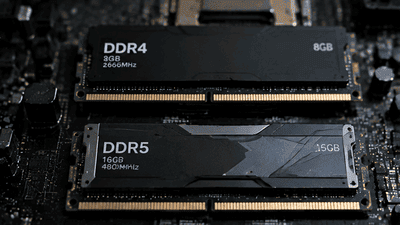
To convert the DDR4–DDR5 price premium into performance benefits, organizations can use a simple framework. First, they estimate the incremental cost of DDR5 over DDR4 for a given system or fleet—this includes module prices and any platform differences. Second, they model the performance gains expected from DDR5 for their specific workloads, such as percentage improvements in throughput, reductions in job completion time, or increases in concurrent users supported.
Third, they translate those performance gains into economic metrics. For example, faster job completion may allow more work per server, deferring hardware purchases; higher throughput may increase revenue‑generating capacity; or better responsiveness may reduce operational costs and user friction. Finally, they compare the incremental cost with the projected economic benefits. If the benefits outweigh the premium over a reasonable period, the switch becomes economically rational.
In many AI, analytics, and virtualization contexts, the performance benefits are substantial enough that even modest DDR5 premiums can be justified, especially when memory bandwidth has been a known bottleneck. In less intensive workloads, such as basic office applications, the benefits may be smaller, making the premium harder to convert into clear gains. This underscores the importance of workload‑specific analysis.
The switching window: why now?
The idea that “the switching window is open” implies timing matters. Several factors make the current phase particularly favorable for moving from DDR4 to DDR5. First, platform availability: major CPU and server platforms have now broadly adopted DDR5, making it the default for new systems. This reduces the friction and risk associated with switching, since supporting hardware and firmware ecosystems are mature.
Second, price stabilization: DDR5 modules have moved past their early volatility and are available from multiple vendors at more predictable prices. The gap relative to DDR4 has narrowed enough that cost differences no longer dominate procurement discussions as strongly as before.
Third, workload evolution: many organizations have ramped up memory‑intensive workloads such as AI, real‑time analytics, and dense virtualization. These workloads expose the limitations of DDR4 more clearly, making DDR5’s advantages more tangible. When constraints are visible, decision‑makers are more willing to accept a premium for relief.
Together, these factors create a window during which switching delivers both technological and economic benefits before DDR4’s support and relevance decline further. Acting within this window allows buyers to capture performance gains while prices are relatively favorable and transition costs are manageable.
Data center perspective: fleet planning and TCO
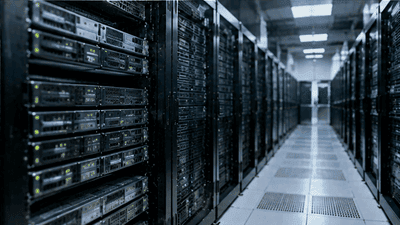
From a data center perspective, the DDR4–DDR5 switching decision is closely tied to fleet planning and TCO models. Operators must consider not only the cost of memory modules but also the broader impact on server counts, energy consumption, cooling, and operational complexity. Switching to DDR5 may allow for higher‑density, more efficient servers that deliver more performance per rack unit and per watt.
When DDR5 enables better utilization of compute and reduces per‑workload resource needs, data center planners can adjust capacity roadmaps. They might deploy fewer servers to handle the same workload or defer expansions by getting more mileage out of existing space and power envelopes. These outcomes reduce long‑term capital expenditures and operational costs, helping convert memory premiums into overall savings.
Data centers also benefit from standardization. As more of the fleet moves to DDR5, inventories become simpler, maintenance is streamlined, and compatibility issues decrease. Retaining DDR4 for new deployments can complicate logistics and support, especially as DDR4 gradually exits mainstream production. The switching window thus represents an opportunity to align fleet architecture with future standards, reducing complexity and risk.
Enterprise and SMB perspective: balancing budget and longevity
For enterprises and small‑to‑medium businesses, the switching decision often revolves around balancing near‑term budgets with long‑term system longevity. DDR4‑based systems may look attractive due to lower initial memory costs, but they risk shorter relevance as software and workloads evolve to expect DDR5‑class performance and platform features.
Investing in DDR5 today can extend the useful life of new systems, reducing the need for early upgrades. Enterprises planning multi‑year deployment cycles should consider whether the incremental upfront cost is offset by avoiding premature hardware refreshes. When future software updates and workloads assume DDR5’s capabilities, DDR4 systems may struggle to keep up, especially in collaborative or data‑intensive scenarios.
SMBs with less demanding workloads may find the case for DDR5 weaker, but they can still benefit from future‑proofing if they anticipate growth in analytics, virtualization, or AI‑assisted tools. The switching window allows them to buy into modern platforms at relatively modest premiums compared with early DDR5 phases, making it easier to justify moving beyond DDR4.
OEM and system integrator perspective: portfolio strategy
OEMs and system integrators must decide how quickly to pivot their portfolios toward DDR5. Offering both DDR4 and DDR5 options can help cover diverse customer needs, but it also increases complexity. As DDR5 adoption grows and the price gap shrinks, OEMs may find it more efficient to focus on DDR5 for new designs while limiting DDR4 to specific legacy or low‑cost models.
For integrators, the switching window is an opportunity to refresh reference architectures and solution stacks. By incorporating DDR5 into default configurations for servers, workstations, and specialized appliances, they can deliver better performance and position clients for future workloads. They can also frame DDR5 as part of a broader modernization narrative, connecting memory upgrades with improvements in CPU, storage, and networking.
System integrators that move quickly to optimize for DDR5 may gain competitive advantage, offering configurations that perform better under real workloads while maintaining competitive pricing. Those that hesitate risk being perceived as behind the curve or offering less attractive value, especially in segments where performance is a key differentiator.
Practical steps for evaluating the switching decision
Organizations considering a switch from DDR4 to DDR5 can follow several practical steps to evaluate the decision. First, they should inventory current and planned workloads, identifying where memory bandwidth and latency are known constraints. This helps focus analysis on areas where DDR5’s benefits would be most impactful.
Second, they can run targeted benchmarks or pilot deployments comparing DDR4 and DDR5 configurations under representative workloads. These tests should measure not just synthetic metrics but end‑to‑end outcomes like job completion time, user response times, and resource utilization. The results form the empirical basis for converting price premiums into performance gains.
Third, they should construct TCO models that incorporate memory costs, server counts, energy consumption, and expected lifespan. Including qualitative factors such as future‑proofing and operational simplicity can provide a more complete picture. If DDR5 yields clear advantages in these models, the switching window becomes a compelling opportunity rather than a speculative bet.
Finally, organizations should engage with vendors and integrators to understand roadmap trajectories. Knowing when DDR4 support may start to wane and how DDR5 will evolve (including speed grades and capacity options) can inform decisions about timing and scale of the switch.
Risks and caveats: not a universal mandate
Despite the favorable conditions, switching from DDR4 to DDR5 is not a universal mandate. Some workloads remain insensitive to memory performance, and for them, DDR4 may remain adequate. Environments with tight budget constraints or limited growth expectations may prioritize immediate cost savings over long‑term benefits.
Moreover, DDR5 adoption involves platform considerations. Legacy systems cannot simply be upgraded by swapping modules; they require compatible motherboards and CPUs. For organizations with large installed bases of DDR4‑only hardware, a full transition may need to coincide with broader refresh cycles, which can take time and careful planning.
Finally, market dynamics can change. While the current window offers favorable conditions, future price movements, technology advances, or macroeconomic shifts could alter the balance. Decisions should be grounded in current data and realistic projections, not purely in generational enthusiasm.
Conclusion: making the most of the open window
The narrowing price premium between DDR4 and DDR5, combined with mature platforms and evolving workloads, has opened a strategic switching window. For many buyers, especially in performance‑sensitive and growth‑oriented environments, this window represents an opportunity to convert the remaining premium into tangible gains in throughput, efficiency, and future‑proofing.
By treating DDR5 not simply as a more expensive alternative but as a key enabler of modern compute architectures, organizations can make more informed decisions about when and how to transition. Careful workload analysis, empirical testing, and TCO modeling can reveal where DDR5 delivers clear value and where DDR4 still suffices. Those who seize the window with thoughtful planning stand to build more capable and resilient infrastructures, positioning themselves well for the next wave of software and hardware innovation.