
NAND Flash Prices Rise for 5 Consecutive Quarters, Enterprise SSDs as Main Engine
After a prolonged downturn in the memory cycle, NAND flash prices have climbed for five consecutive quarters, marking a decisive shift in market dynamics. The key driver behind this sustained upswing is not the consumer segment but enterprise solid‑state drives (SSDs), which have emerged as the main engine of demand and pricing power. As hyperscale data centers, cloud service providers, and large enterprises expand storage capacity and upgrade performance, their appetite for high‑density, high‑reliability SSDs has tightened supply and pushed up contract prices across the NAND value chain.

This blog post examines why NAND flash prices have risen over multiple quarters, how enterprise SSDs have taken the lead in this recovery, and what the implications are for manufacturers, system integrators, and end users. We will look at the interplay between supply discipline and demand growth, the changing role of client and mobile segments, and the structural factors that could sustain or temper this price momentum going forward.
From downturn to multi‑quarter price recovery
The NAND market is cyclical. Periods of aggressive capacity expansion and soft demand often lead to oversupply, steep price declines, and margin compression for memory vendors. In the downturn preceding the current upcycle, several factors converged: slower smartphone refresh rates, cautious PC spending, and a digestion phase in cloud infrastructure investments. As a result, NAND ASPs fell to levels that were unsustainably low relative to production costs and capital expenditures.
Faced with this environment, major NAND vendors shifted strategy. They curtailed wafer input, delayed some capacity ramps, and adjusted technology transition timing to align more closely with demand. This supply discipline created the preconditions for a price recovery. As demand gradually picked up and excess inventory was drawn down, the market moved from oversupply toward balance, and then into tightness. The resulting price increases did not happen overnight but accumulated over consecutive quarters, reflecting a more measured and structural adjustment rather than a temporary spike.
Why enterprise SSDs became the main engine

While consumer devices still account for significant NAND usage, enterprise SSDs have played the central role in the current price recovery for several reasons. First, enterprise SSDs are closely tied to data center and cloud infrastructure growth. As organizations accelerate digital transformation, adopt AI workloads, and migrate more services to the cloud, demand for fast, reliable storage grows in tandem. Enterprise SSDs offer performance, endurance, and features that spinning disks and consumer‑grade drives cannot match at scale.
Second, enterprise SSD buyers are less price‑sensitive than typical consumer segments. For hyperscalers and large enterprises, storage decisions hinge on total cost of ownership and performance per watt rather than lowest possible cost per gigabyte. When NAND prices rise, these customers may negotiate, but they are more willing to accept higher prices if they align with service‑level requirements and system‑level efficiency gains. This willingness supports a healthier pricing environment and allows vendors to pass through part of their cost increases.
Third, enterprise SSDs tend to use higher‑quality dies, more sophisticated controllers, and more complex firmware, which justify premium pricing. The mix shift toward higher‑value products reinforces revenue growth even when unit shipments grow at a moderate pace. With enterprise SSDs occupying a larger share of total NAND bit consumption, the average realized price for vendors naturally increases.
Data center architecture trends fueling SSD demand
Several architectural trends in data centers underpin the surge in enterprise SSD demand. One major trend is the migration from hard disk drives (HDDs) to SSDs in performance‑sensitive and latency‑critical workloads. While HDDs remain relevant for cold storage, many applications—such as online transaction processing, analytics, search, and AI inferencing—require fast access to data. SSDs significantly reduce latency and improve throughput, enabling better user experiences and more efficient resource utilization.
Another trend is the growth of scale‑out and disaggregated storage architectures. In these designs, storage is decoupled from compute and accessed over fast networks. Enterprise SSDs fit naturally into this paradigm, providing consistent performance across large clusters and allowing storage to scale independently. As organizations adopt such architectures, they deploy more SSDs per rack and per data center, raising total demand.
AI and machine learning workloads further amplify SSD requirements. Training and inference often involve large datasets that must be fed to accelerators at high speed. While some of this data is cached in DRAM or specialized memory, underlying storage layers increasingly rely on SSDs to avoid bottlenecks. As AI adoption spreads beyond early adopters into mainstream enterprises, the cumulative impact on SSD consumption becomes significant.
Supply discipline and technology transitions in NAND

On the supply side, NAND vendors have balanced two competing imperatives: controlling output to support pricing, and continuing technology transitions to higher‑layer, more advanced 3D NAND structures. Technology transitions—such as moving from lower to higher layer counts and refining cell architectures—enable more bits per wafer and reduce cost per bit over time. However, they also require careful management of yields, capital spending, and product qualification.
In the current cycle, vendors have prioritized profitability over sheer volume. They slowed some transitions when yields were not yet optimal, and they avoided flooding the market with low‑margin bits. At the same time, they continued to deploy new generations selectively for enterprise SSDs and other high‑value products. This approach allowed them to capture the performance and density benefits of advanced NAND in segments that reward higher ASPs, while limiting cost pressure from oversupply.
As a result, the increase in NAND prices over five quarters reflects both constrained supply and improved product mix. Vendors can command higher prices for advanced enterprise SSDs that use cutting‑edge NAND and controllers, and those prices pull up average revenue per bit even as technology advances.
Consumer and mobile segments: supportive but not leading
Consumer and mobile segments have played a supporting rather than leading role in the price recovery. Smartphone demand has stabilized after previous volatility, with some growth in storage capacities as users accumulate more media and apps. PCs and laptops, especially in mainstream and gaming categories, have gradually shifted from HDDs to SSDs as well, contributing to overall NAND consumption.
However, these segments tend to be more price‑sensitive and competitive. OEMs and retailers push for affordable SSD options to hit consumer price points, which constrains margin expansion. While rising NAND prices do eventually translate into higher retail SSD prices, the magnitude is often limited because of competitive pressures and the ability to adjust capacities or bundle promotions.
Therefore, while consumer and mobile demand help absorb supply and support the general recovery, they do not provide the same pricing leverage as enterprise SSDs. The main engine of multi‑quarter NAND price increases remains the higher‑value, lower‑elasticity enterprise and data center space.
Impact on SSD and system pricing
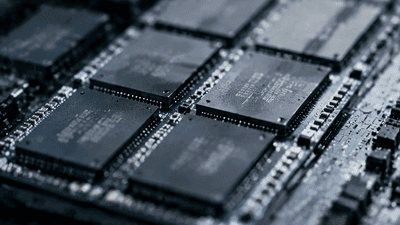
As NAND prices rise, SSD prices follow, but not always in a simple linear fashion. Enterprise SSD contracts are often negotiated with volume commitments and service‑level agreements, which can smooth short‑term price swings. Over several quarters, though, the upward trend in NAND costs exerts pressure on SSD pricing, especially for new contracts and product generations.
For system integrators and OEMs, higher SSD prices can increase bill of materials costs for servers and storage appliances. Some of these costs may be passed on to end customers through higher system prices or service fees. In competitive markets, however, vendors may absorb part of the increase to maintain share, compressing their margins. The degree to which SSD price increases propagate through the system stack depends on market structure, customer bargaining power, and the perceived necessity of SSD performance.
Over time, as SSDs become indispensable for many workloads, system buyers may become more willing to accept higher prices, particularly if they are tied to clear performance gains or energy savings. In such cases, the upward pressure from NAND prices can be partially offset by improvements in SSD capabilities and system‑level efficiency.
Profitability implications for NAND and SSD vendors
For NAND manufacturers, the multi‑quarter price increase directly supports revenue growth and margin recovery. After enduring periods of low prices and high inventory, the ability to raise ASPs while maintaining or improving bit output is essential to funding future investments and sustaining R&D. Vendors focused on enterprise SSDs and advanced NAND technologies stand to benefit the most, as their product portfolios capture the highest value segments.
SSD vendors, which may or may not be integrated with NAND production, experience more complex profitability dynamics. Those that produce their own NAND can capture margin across both layers of the stack, while fabless SSD companies must manage cost increases from suppliers. Vendors with strong enterprise presence and differentiated controller and firmware technologies can justify higher SSD prices and maintain healthy margins even as NAND prices rise.
Conversely, SSD vendors heavily exposed to low‑end consumer markets may face margin pressure if they cannot pass through higher NAND costs. They might respond by optimizing capacities, focusing on cost‑efficient designs, or shifting emphasis to slightly higher segments where performance differentiation is possible. The cumulative effect is a widening gap between high‑value enterprise SSD vendors and more commodity‑oriented competitors.
Risk factors that could temper the uptrend
Despite the favorable trend, several risk factors could temper or reverse the multi‑quarter NAND price rise. One key risk is over‑expansion of capacity in response to improved margins. If vendors collectively ramp wafer input and technology transitions too aggressively, supply may again outpace demand, triggering downward price pressure. The memory industry has experienced such boom‑bust cycles before, and the risk remains as long as investments are driven by competitive dynamics.
Another risk is macroeconomic slowdown. If global economic conditions deteriorate, enterprises and cloud providers may tighten capital spending, delay data center expansions, or optimize storage usage more aggressively. Reduced demand for new servers and storage systems would weaken the primary engine of enterprise SSD growth and, by extension, NAND pricing power.
Technological changes could also alter the landscape. Advances in compression, tiered storage, and data lifecycle management can reduce effective storage needs per unit of workload. While applications continue to generate large volumes of data, smarter algorithms and architectures can mitigate the growth in raw capacity requirements, potentially moderating demand growth for NAND over time.
Structural factors supporting long‑term NAND value
Counterbalancing these risks are structural factors that support long‑term demand for NAND and enterprise SSDs. The global trend toward digitalization, data‑driven decision‑making, and cloud‑native architectures continues to underpin storage requirements. New applications in AI, edge computing, content delivery, and industrial IoT generate ongoing streams of data that must be stored, processed, and accessed quickly.
Moreover, SSDs are steadily displacing HDDs in many performance‑sensitive use cases, and this substitution is far from complete. As SSD costs decline over the long run due to technology scaling, their adoption in more segments becomes economically justified, leading to broader usage even if prices fluctuate in the short term. Enterprise SSDs, in particular, are likely to remain central in high‑value workloads, reinforcing their role as the main engine of demand.
These structural trends suggest that while cyclical corrections may occur, the underlying trajectory for NAND and SSD usage remains upward. Vendors that align their strategies with this long‑term growth, while managing near‑term volatility, can sustain healthy businesses across multiple cycles.
What this means for buyers and planners
For storage buyers—whether data center operators, enterprises, or system integrators—the multi‑quarter rise in NAND prices and SSD costs underscores the importance of strategic planning. Rather than buying purely on spot prices, they may benefit from longer‑term contracts, capacity planning, and technology roadmaps that anticipate future needs and price trends. Such approaches can smooth budgetary impacts and provide more stable supply.
Buyers can also explore optimization strategies to make the most of SSD investments. This includes using tiered storage architectures that balance performance and cost, employing data reduction techniques to cut effective capacity needs, and tuning workloads to minimize unnecessary writes that shorten drive lifetimes. By optimizing usage, organizations can mitigate the financial effects of higher NAND prices without sacrificing performance.
In parallel, planners should monitor market signals, including vendor announcements, capacity expansion plans, and macroeconomic indicators, to adjust their expectations. Recognizing the cyclical nature of memory pricing while appreciating current structural drivers can lead to more informed decisions about when to invest heavily and when to hold back.
Conclusion: enterprise SSDs at the heart of a NAND upcycle
The rise of NAND flash prices over five consecutive quarters reflects a complex interplay of supply discipline, technological advancement, and shifting demand patterns. Enterprise SSDs have emerged as the main engine of this upcycle, powered by data center, cloud, and AI workloads that value performance and reliability over low unit cost. While consumer and mobile segments support overall demand, they lack the pricing leverage and structural importance of enterprise storage.
Looking ahead, the sustainability of this price trend will depend on how vendors manage capacity, how global economic conditions evolve, and how quickly new storage technologies and optimization techniques are adopted. Yet the central role of enterprise SSDs in modern computing architectures suggests that they will continue to exert a strong influence on NAND pricing and market dynamics. Stakeholders across the ecosystem—manufacturers, integrators, and buyers—who understand and prepare for these forces will be better positioned to navigate the cycles and capture the opportunities created by this multi‑quarter NAND price recovery.