
SOXX vs. SMH: The Ultimate Comparison of Holdings Structure and Expense Ratios
When investors look at semiconductor ETFs, SOXX and SMH are usually the first two names that come up. They both offer straightforward exposure to the chip industry, both are widely traded, and both are used as core tools for expressing a view on semiconductors. But while they look similar on the surface, the way they are built is meaningfully different. Those differences show up most clearly in holdings structure and, to a lesser extent, in expense ratio.

That is where the real decision lives. If you care about concentration, diversification, index construction, and how much of your money is tied to a few mega-cap names, the comparison becomes much more interesting. SOXX and SMH are not just two versions of the same idea. They are two different ways of packaging semiconductor exposure.
Why This Comparison Matters
Semiconductor ETFs are often treated like interchangeable products, but they are not identical. The sector is already concentrated, cyclical, and highly sensitive to a small number of dominant companies. That means the structure of the ETF matters a lot. A fund with heavier concentration can behave very differently from one with a broader holdings base, even if both are labeled “semiconductor ETFs.”
SOXX and SMH both aim to capture the same broad theme, but they do so with different index methodologies and portfolio construction rules. One may be a bit more diversified, the other a bit more concentrated. One may tilt more toward certain large names, while the other spreads the exposure slightly wider. Those distinctions can affect volatility, drawdowns, and returns over time.
For an investor, the question is not just which ETF is better. It is which ETF is better for the specific job you want it to do.
Holdings Structure: The Main Difference

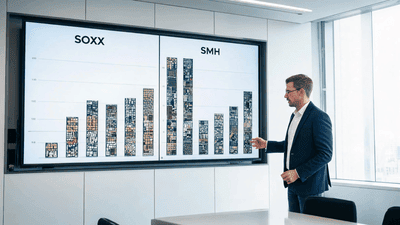
The biggest difference between SOXX and SMH is how the portfolios are structured. SMH is generally more concentrated in its top holdings, while SOXX tends to hold a slightly larger number of names and spreads the weights a bit more evenly. That sounds subtle, but in semiconductors subtlety matters. If one or two names dominate the sector’s performance, concentration can make a huge difference.
SMH often leans more heavily toward the largest semiconductor leaders, especially the names associated with AI, foundry dominance, and global chip scale. That can make it very powerful when those leaders are running. But it can also make the fund more vulnerable if one of those giants stumbles. SOXX, by comparison, often feels a little more balanced across the broader semiconductor ecosystem. It still has major large-cap exposure, of course, but the top-end concentration is usually somewhat lower.
This matters because semiconductor investing is not only about owning the biggest winners. It is also about deciding how much dependence you want on the biggest winners.
Concentration Versus Breadth
SMH is typically the more concentrated ETF. That means a larger share of assets is tied to a smaller set of companies. If those companies outperform, SMH can look excellent. But if one of them becomes overextended, the ETF can feel more volatile. Concentration is a double-edged sword. It can amplify returns, but it can also amplify pain.
SOXX usually offers a slightly broader basket. That does not make it fully diversified in the traditional sense—this is still a sector ETF, after all—but it does reduce dependence on the very top names to a modest degree. For some investors, that makes SOXX feel cleaner and less exposed to “single-name ETF risk.” For others, it may feel less aggressive and therefore less exciting.
The right answer depends on your temperament. If you want a stronger bet on the sector’s biggest leaders, SMH may fit better. If you want semiconductor exposure with a somewhat wider spread across the industry, SOXX may be the more comfortable choice.
The Role of Nvidia and Other Giants
No comparison of semiconductor ETFs is complete without talking about Nvidia, TSMC, AMD, Broadcom, and a few other large names. These are the stocks that often move the sector, and both ETFs are heavily influenced by them. The difference is how much influence each one has.
SMH often gives Nvidia and other mega-cap leaders a larger share of the portfolio. That means it can track the momentum of those names very closely. If Nvidia surges, SMH can benefit more directly. If Nvidia pulls back sharply, SMH can also feel the impact more acutely. SOXX usually keeps those weights a bit more moderate, which can reduce the “all eggs in one basket” effect.
This distinction is especially important in a market where semiconductor leadership can become narrow. When only a few names are driving the entire sector, the ETF structure decides whether you are making a concentrated bet on leadership or a broader bet on the industry.
How the Index Methodology Shapes the Fund
SOXX and SMH do not just differ by accident. Their parent indexes use different rules to select and weight holdings, and those rules influence the final behavior of the fund. That means the choice is not only about the number of holdings. It is also about what type of semiconductor exposure the index is trying to achieve.
A more concentrated methodology may favor the largest, most liquid, and most strategically important names. That can improve thematic purity if your goal is to own the dominant semiconductor leaders. A broader methodology may include more names and reduce the dominance of any single stock. That can make the ETF better as a sector barometer.
In practical terms, the methodology determines whether you are buying a megacap semiconductor trade or a broader industry basket. That is a meaningful difference, even if both funds are in the same category.
Expense Ratio: Close, But Still Worth Noting

The expense ratio comparison is much less dramatic than the holdings comparison. SOXX and SMH are very close on fees, and in most cases the difference is small enough that it should not be the main deciding factor. Still, in ETF investing, small differences matter over long periods, especially when the rest of the structure is already very similar.
If one fund is marginally cheaper, that is a positive. But a tiny fee difference should not outweigh the more important question of portfolio construction. A lower expense ratio does not automatically make the ETF the better choice if the holdings structure is a worse fit for your goal. In this case, the fee gap is more of a tie-breaker than a deciding factor.
So yes, expense ratio matters. But in the SOXX versus SMH debate, it is really the second-order question. The primary issue is how the fund is built and what kind of semiconductor exposure it delivers.
Risk Profile and Volatility
Because SMH is usually more concentrated, it often carries a slightly more aggressive risk profile. That can be attractive if you believe the sector’s largest names will keep leading. It can also be uncomfortable if the market starts rotating away from the biggest winners or if one of the top holdings experiences a setback.
SOXX, with its somewhat broader holdings structure, may offer a slightly smoother ride. That does not mean it is low-volatility. Semiconductors are never low-volatility in any absolute sense. But relative to SMH, it can feel a bit less top-heavy and a bit less dependent on a few stock-level narratives. That can matter a lot when the market gets choppy.
If you are the kind of investor who likes to hold through turbulence without obsessing over a handful of names, SOXX may feel easier to own. If you want more direct exposure to the sector’s strongest momentum leaders, SMH may better match your style.
Performance Style: Different Paths, Similar Theme
Over time, both ETFs tend to move in the same general direction because they are exposed to the same industry. But they do not always move at the same speed or with the same intensity. SMH can outperform when the largest semiconductor names are rallying hard. SOXX can hold up better when the leadership is broader or when concentration becomes a headwind.
That makes the two funds behave like cousins rather than clones. Their correlation is usually high, but their return profile is not identical. Sometimes the difference is only a few percentage points. Other times it can be more noticeable, especially during periods when one or two giant names dominate the sector narrative.
The important takeaway is that performance differences between SOXX and SMH are often less about the semiconductor theme itself and more about portfolio construction. The same sector can produce different ETF outcomes depending on how the holdings are arranged.
Which Investor Fits Which Fund?
The better ETF depends on what kind of investor you are. If you want a semiconductor fund that leans more heavily into the sector’s biggest and most influential names, SMH may be the more aggressive and focused choice. If you want something slightly less concentrated and a touch more balanced, SOXX may be more appealing.
Here is a simple way to think about it:
- Choose SMH if you want maximum exposure to the biggest semiconductor leaders.
- Choose SOXX if you want a somewhat broader spread across the industry.
- Choose SMH if you are comfortable with higher concentration risk.
- Choose SOXX if you prefer a structure that may feel a bit less top-heavy.
Neither fund is “wrong.” They simply emphasize different ways of owning the same broad theme. That is why the holdings structure deserves more attention than the small fee difference.
What About Long-Term Use?
For long-term investors, the choice may come down to how you want to experience the semiconductor cycle. If you believe the biggest leaders will continue to dominate for years, a more concentrated fund like SMH can be a strong expression of that view. If you want semiconductor exposure but prefer a little more balance, SOXX may be more appropriate.
Think of it as the difference between a focused conviction trade and a slightly more moderated sector allocation. Both can work. Both can compound well if the industry continues to expand. But the emotional experience of holding them is not the same, especially during sharp rotations or sector corrections.
That is often the real hidden value of ETF structure: it shapes not just return, but behavior. And behavior matters just as much as performance.
Final Take
SOXX and SMH are both strong semiconductor ETFs, but they are not identical. Their expense ratios are close enough that fees should not drive the decision. The real distinction lies in holdings structure: SMH is usually more concentrated in the largest names, while SOXX generally offers a slightly broader and less top-heavy profile.
If you want a stronger bet on the biggest chip leaders, SMH may be your better fit. If you want semiconductor exposure with a bit more breadth and a little less concentration risk, SOXX may be the more balanced choice. In the end, the best ETF is not the one with the best reputation. It is the one whose structure matches your view of the sector.