
12 Consecutive Weeks of Net Inflows into Semi ETFs – The Smart Money Allocation Logic
Twelve straight weeks of net inflows into semiconductor ETFs is not just a flow statistic. It is a message. When money keeps moving into the same corner of the market week after week, investors should ask a deeper question: what is the allocation logic behind it? In semiconductors, inflows are rarely random. They usually reflect a mix of performance chasing, structural conviction, portfolio rebalancing, and a belief that the sector still has room to run. The interesting part is that all of those motives can coexist at the same time.

Semiconductor ETFs have become one of the clearest expressions of the market’s conviction around AI, data centers, chip cycle recovery, and digital infrastructure. But consistent inflows also reveal something more subtle. They suggest that investors are not just buying headlines. They are building exposure with a strategic mindset. In other words, smart money is not simply arriving because semis are hot. It is arriving because semis may still be underowned relative to their importance.
Why Flow Streaks Matter
A one-week inflow can be noise. A twelve-week inflow streak is a pattern. That pattern matters because it suggests persistence in investor behavior rather than a one-off reaction to news. In ETF markets, flow streaks often reflect a changing conviction level. Investors are not just entering the sector; they are staying with it. That can tell you a lot about how the market is thinking about the semiconductor theme.
When inflows persist, they can reinforce price momentum, improve liquidity, and support valuation expansion. But the streak itself also reflects behavior. Investors tend to allocate steadily when they believe a theme is structural rather than cyclical. That is especially true in semiconductors, where the market increasingly sees chips as essential infrastructure for AI, cloud, automotive, industrial automation, and edge computing. The flow streak suggests that the market is treating semis less like a trade and more like a strategic allocation.
That difference matters. A trade comes and goes. An allocation stays in place longer, and that creates a more durable demand base.
The Logic Behind Smart Money

The phrase “smart money” is often used loosely, but in ETF flow analysis it usually means capital that is moving with some level of discipline, foresight, or institutional logic. It does not have to be perfect. It just has to be more strategic than impulsive. In the case of semiconductor ETFs, smart money may be responding to several overlapping ideas.
First, semiconductors sit at the center of the AI buildout. Second, earnings visibility has improved in parts of the sector, especially where demand is tied to data-center infrastructure. Third, semiconductor exposure through ETFs provides a cleaner way to capture the theme than picking a single stock. Fourth, ETFs offer liquidity, simplicity, and broad access, which makes them suitable for both tactical and strategic positioning.
That combination makes semis attractive to institutions that want exposure without taking single-name risk. It also makes them attractive to retail investors who want a diversified way to express a bullish view. The smart money logic, then, is not only about conviction in the sector. It is also about efficiency of exposure.
What Twelve Weeks Suggests
Twelve consecutive weeks of inflows implies more than enthusiasm. It implies persistence. That persistence often reflects a three-part allocation story. First, investors are underexposed and need to add. Second, they want to maintain exposure as the theme keeps working. Third, they see better risk-reward in staying allocated than in constantly rotating out.
In semiconductors, that kind of behavior often appears when a secular theme is still in the early or middle stage of institutional recognition. If the sector has already become fully crowded, inflows may become more erratic or begin to flatten. But if the inflows continue for twelve weeks, it suggests that buyers still believe the theme has not been fully priced in. They are willing to keep allocating despite the sector already being popular, which is a strong signal of conviction.
That does not mean the trade is risk-free. It means the allocation logic is strong enough to overpower short-term hesitation.
Why Semis Attract Persistent Flows

There are a few reasons semiconductor ETFs tend to attract sticky inflows. One is thematic clarity. Investors understand why semis matter. Another is portfolio convenience. A semiconductor ETF can provide immediate exposure to a broad technology subcycle without requiring constant stock selection. A third is narrative strength. AI has become a powerful story, and semiconductors are the hardware layer behind it.
There is also a positioning argument. If many investors believe semis are structurally important, they may add slowly over time rather than all at once. That creates a long flow streak instead of a single burst. Large asset allocators often prefer to scale into positions, especially in volatile sectors. That makes semiconductors ideal candidates for multi-week inflow trends.
In practical terms, persistent inflows can also reflect portfolio rebalancing. If semis outperform, some managers add to maintain target weights. If they underweight the sector initially and then see it continue to work, they may be forced to chase. Either way, the ETF sees repeated demand.
Different Investors, Same Direction
One of the most interesting parts of a long inflow streak is that the buyers may not be identical. Some are likely momentum investors. Others are long-term allocators. Some may be rotating out of other tech exposures and into semis. Some may be using the ETF as a proxy for AI infrastructure. All of them, however, are pushing in the same direction.
That diversity of motive can make the flow trend more durable. If only one type of investor is buying, the streak may fade quickly. But if multiple groups see value in the same ETF, the flows can last longer. That is especially true in semiconductors because the sector sits at the crossroads of growth investing, technology investing, and macro investing. It appeals to different styles for different reasons.
A smart money flow streak is often strongest when it is supported by both narrative and fundamentals. Semis currently have both.
How ETF Structure Shapes the Story
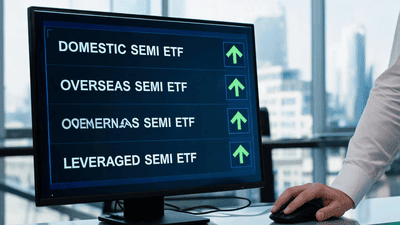
Not all semiconductor ETFs attract flows in the same way. Some are highly concentrated, giving heavy weight to the largest chip leaders. Others are more balanced across the industry. Some are global in scope, while others are region-specific. The structure of the ETF influences what kind of investor finds it attractive.
A concentrated fund may draw buyers who want direct exposure to the mega-cap AI leaders. A more diversified fund may appeal to investors who want broader semiconductor participation, including equipment, materials, and secondary beneficiaries. An ETF with a clear and liquid structure may also receive more allocation simply because it is easier to use in portfolios.
This means flow streaks are not only about the sector. They are also about product design. A good ETF can become the preferred vehicle for a strong thematic trade. When that happens, the fund’s inflows reflect both conviction in semiconductors and confidence in the ETF wrapper itself.
What Smart Money May Be Avoiding
It is just as useful to ask what the flow streak may be avoiding. A long inflow trend can signal that investors prefer diversified exposure over single-name risk. It may also indicate caution around valuation, since ETFs can offer broad participation without forcing a bet on one stock at an extreme multiple. In a sector like semiconductors, that can be a sensible compromise.
Investors may also be avoiding the risk of being too early or too narrow. If the AI buildout continues to broaden across memory, networking, foundry, and equipment, then a semiconductor ETF can capture the theme more flexibly than a single stock can. Smart money often prefers flexibility when the cycle is still evolving. That is why ETF inflows can persist even after large rallies. Buyers are not necessarily chasing the last move. They are positioning for the next layer of the trend.
In that sense, the ETF becomes the “do not miss the theme” vehicle rather than the “guess the winner” vehicle.
Flow Streaks and Market Psychology
Persistent inflows can create a feedback loop. More inflows improve liquidity, which makes the ETF easier to trade. Better liquidity attracts more investors. That can support price stability and reinforce confidence. In semiconductors, where sentiment matters a lot, that loop can be powerful.
But psychology cuts both ways. If investors see a long flow streak, they may interpret it as validation and join in. That can be rational if the sector’s fundamentals are improving. It can also become crowded if too many people pile into the same trade for the same reasons. The difference lies in whether the flows are supported by earnings, capex trends, and end-market demand.
Right now, the semiconductor story has enough fundamental support that inflows are not just a reflexive bubble signal. They look more like a structured allocation choice. But the market will keep testing that logic over time.
What This Means for Portfolio Construction
If you are building a portfolio, twelve weeks of net inflows into semi ETFs suggests that the market is still rewarding semiconductor exposure as a core thematic sleeve. That does not mean every investor should be overweight the sector, but it does mean semis have moved from fringe theme to institutional conversation. For some portfolios, that may justify a dedicated allocation rather than a scattered technology tilt.
A smart allocation approach may be to treat semiconductors as a strategic satellite position or even a semi-core growth sleeve. The ETF wrapper makes this easier because it lowers single-stock risk and reduces the need to monitor every company individually. That is especially useful when the underlying sector is moving on multiple fronts at once: AI demand, memory cycles, capital spending, and supply-chain localization.
The flow trend may therefore be telling investors to stop thinking of semis as just another tech subindustry. They are increasingly a standalone strategic theme.
What to Watch Next
The key question is whether inflows continue. A twelve-week streak is impressive, but the next few weeks will tell us whether the trend is still being driven by fresh conviction or simply by momentum inertia. Investors should watch for changes in breadth, volatility, and leadership within the sector. If inflows continue while the market broadens beyond a few names, that would be a sign of healthy allocation. If inflows continue only because one or two stocks are dominating, the picture is less robust.
It is also useful to monitor whether flows are concentrated in one type of semiconductor ETF or spread across several products. Broad-based inflows suggest strong sector conviction. Narrow inflows into concentrated products suggest a more tactical, momentum-driven posture. Both are meaningful, but they imply different things about smart money behavior.
The most important signal is whether investors keep treating semis as a structural allocation rather than a temporary trade.
Conclusion
Twelve consistent weeks of net inflows into semiconductor ETFs says a lot about how the market is thinking. It suggests that investors see semiconductors as more than a hot theme. They see them as a long-duration allocation with strategic relevance in the AI and digital infrastructure era. The logic behind that smart money flow is part conviction, part convenience, and part portfolio discipline.
The message is simple but important: when money keeps flowing into semis for twelve straight weeks, the market is voting on the future. It is saying that chips still matter, the theme still has room, and the ETF wrapper remains the preferred way to express that view. Whether the streak continues will depend on fundamentals, valuation, and the next wave of earnings and policy news. But for now, the inflow pattern itself is a strong clue about where institutional and tactical capital believes the opportunity still lies.